
Milk Thistle for Liver Detox: Benefits, Dosage, and How It Works
If you are considering milk thistle for liver detox, you are probably asking a few important questions. Can it help


Nearly every american faces daily exposure to chemicals from food, water, and the environment. With almost every aspect of modern life contributing to toxin buildup, understanding detoxification is more important than ever. Research shows that supporting the body’s natural processes not only promotes internal balance but can help restore energy that many feel is lost. This article offers clear insight into what detox actually means, why it matters, and how the right strategies may benefit overall health.
| Point | Details |
|---|---|
| Purpose of Detoxification | Detoxification is a natural biological process mainly performed by the liver to eliminate harmful substances and restore internal balance. |
| Types of Detox Protocols | Detox protocols can be dietary, supplemental, physical, or holistic, focusing on supporting the body’s natural elimination of toxins. |
| Energy Levels and Detox | Detoxification can impact energy levels, as some approaches may initially cause temporary fatigue while the body recalibrates. |
| Risks of Detox Programs | Potential risks include dehydration and metabolic disruptions, highlighting the importance of supporting the body’s natural detox processes rather than relying on extreme interventions. |
Detoxification represents a critical biological process through which our bodies systematically remove harmful substances and restore internal balance. At its core, detoxification is a natural physiological mechanism primarily executed by the liver, targeting the elimination of toxic compounds that can compromise our overall health and energy levels. Understanding the detoxification process reveals how our body constantly works to maintain optimal functioning.
The fundamental purpose of detox extends far beyond a simple cleansing routine. When toxic substances accumulate in our system, they can disrupt cellular processes, impair metabolic functions, and significantly drain our energy reserves. These toxins originate from multiple sources – environmental pollutants, processed foods, stress, medications, and metabolic byproducts – creating a complex network of potential health challenges. Scientific research indicates that effective detoxification helps neutralize these harmful agents, supporting the body’s natural healing and regenerative mechanisms.
Detox strategies encompass a wide range of approaches, from dietary modifications to targeted supplementation. While some detox programs focus on short-term interventions, the most effective protocols emphasize sustained, holistic support for the body’s inherent cleansing systems. The ultimate goal remains consistent: reducing toxic load, enhancing metabolic efficiency, and restoring optimal energy production. By understanding and supporting our body’s natural detoxification pathways, we can proactively manage our health and maintain robust energy levels in an increasingly complex environmental landscape.
Detox protocols represent a diverse array of methodologies designed to support the body’s natural elimination of harmful substances. Detox protocols range from comprehensive whole-body approaches to targeted interventions that focus on specific physiological systems. These strategies can be broadly categorized into dietary, supplemental, physical, and holistic modalities, each targeting toxin removal through unique mechanisms.
Traditional detox approaches often incorporate several key techniques. Nutritional interventions might include specialized fasting regimens, juice cleanses, or diets emphasizing whole foods that support metabolic detoxification. Some protocols utilize herbal remedies, dietary supplements, and precise nutritional strategies to enhance the body’s natural elimination pathways. Physical detoxification methods can extend beyond nutrition, incorporating practices like sweating through sauna sessions, targeted exercise routines, and lymphatic stimulation techniques that help mobilize and eliminate stored toxins.
Advanced detox protocols often integrate multiple approaches for comprehensive support. These sophisticated strategies might combine dietary modifications, targeted supplementation, stress reduction techniques, and lifestyle interventions. By understanding individual biochemical needs, these protocols aim to optimize the body’s inherent detoxification systems, supporting cellular health and energy production. The most effective detox approaches recognize that toxin elimination is a complex, multifaceted process requiring a holistic and personalized strategy.
Detoxification plays a complex and nuanced role in managing our body’s energy systems, with profound implications for overall metabolic performance. Cellular detoxification processes fundamentally interact with our energy production mechanisms, creating intricate pathways that determine how efficiently our bodies generate and utilize energy. When toxic substances accumulate, they can significantly impair mitochondrial function, reducing the cellular capacity to generate adenosine triphosphate (ATP), which serves as the primary energy currency for biological systems.

Interestingly, detox protocols can produce varied energy impacts, with some approaches potentially causing temporary energy fluctuations. Certain detoxification strategies, particularly those involving prolonged fasting, might initially trigger decreased energy levels as the body redirects metabolic resources toward elimination processes. Some individuals experience weakness, headaches, and reduced physical performance during intensive detox interventions. These temporary energy disruptions represent the body’s natural recalibration mechanism, where metabolic systems are working to purge accumulated toxins and restore optimal functioning.
Optimal detoxification supports sustained energy production by enhancing mitochondrial efficiency, reducing inflammatory responses, and promoting cellular regeneration. Advanced detox approaches focus on comprehensive strategies that minimize energy disruption while maximizing metabolic cleansing. By supporting the body’s natural elimination systems through targeted nutrition, strategic supplementation, and lifestyle modifications, individuals can maintain consistent energy levels while supporting comprehensive cellular health. The key lies in understanding individual metabolic needs and implementing balanced, personalized detoxification protocols that work harmoniously with the body’s inherent energy production mechanisms.
Detoxification support supplements play a critical role in maintaining and enhancing cellular energy production. Nutritional supplements designed for detox offer targeted support for metabolic processes, helping to optimize the body’s natural elimination and energy generation systems. The most effective ingredients work synergistically to combat oxidative stress, support mitochondrial function, and provide essential nutrients that fuel cellular metabolism.
Key supplements known for supporting energy during detoxification include vitamin complexes that combat oxidative stress. Vitamin C emerges as a powerful antioxidant that not only supports immune function but also helps neutralize free radicals that can drain cellular energy. Other critical nutrients include B-complex vitamins, which play a fundamental role in converting food into usable energy, and minerals like magnesium that support mitochondrial efficiency and cellular respiration.
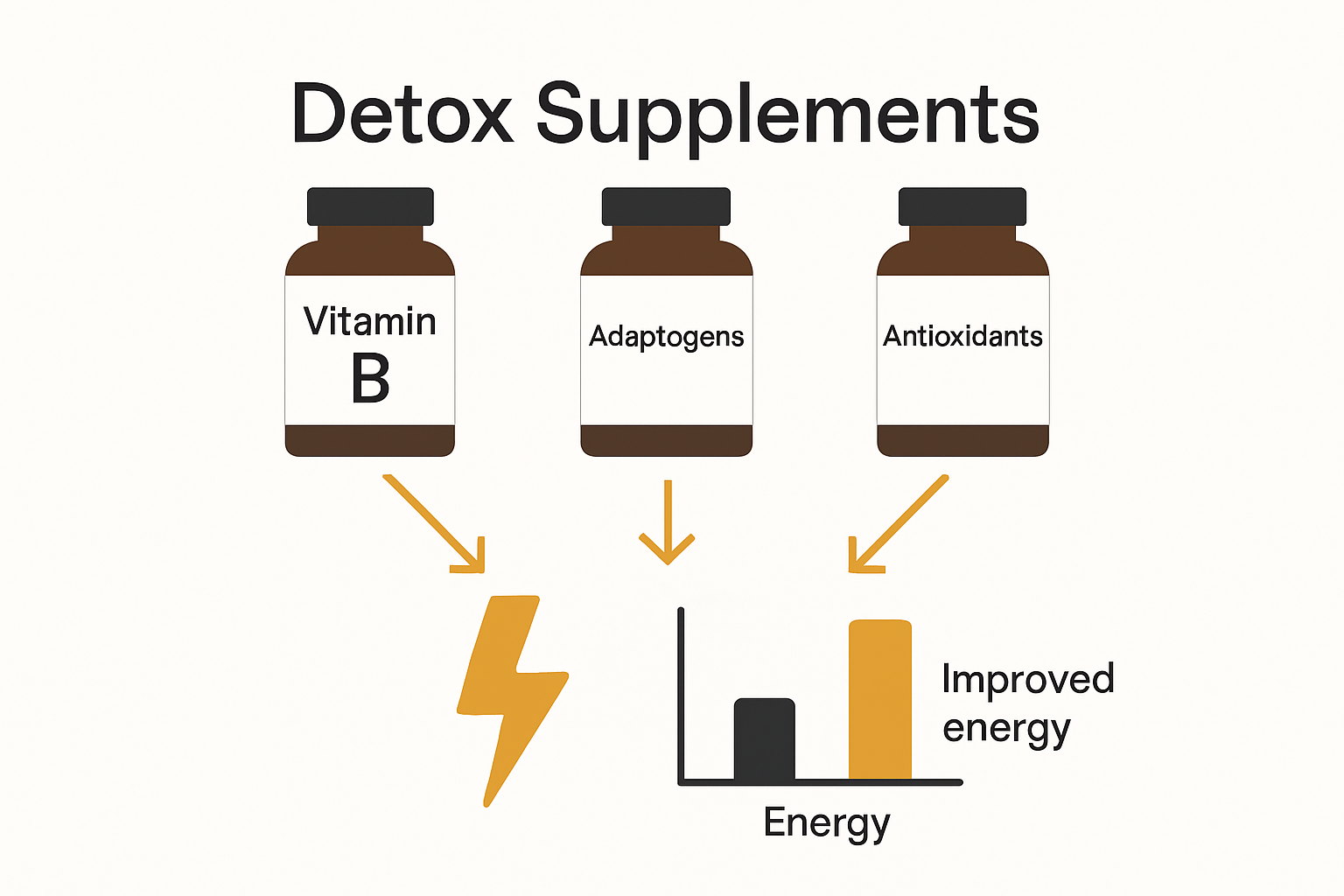
Comprehensive detox support requires a holistic approach to supplementation. Advanced protocols incorporate adaptogenic herbs, amino acid complexes, and targeted nutritional compounds that help mitigate energy depletion during detoxification processes. Ingredients such as N-acetyl cysteine (NAC), alpha-lipoic acid, milk thistle, and selenium work together to enhance the body’s natural detoxification pathways while maintaining optimal energy production. The most sophisticated detox strategies recognize that energy support is not about temporary stimulation, but about providing sustained nutritional support that allows the body to efficiently remove toxins while maintaining metabolic balance and vitality.
Detox programs can present significant health challenges that individuals must carefully consider before implementation. Detox cleanse side effects range from mild discomfort to potentially serious physiological disruptions that can compromise overall wellness. The human body possesses sophisticated internal mechanisms for eliminating toxins, primarily through the liver and kidneys, which naturally filter and process harmful substances with remarkable efficiency.
Potential risks associated with detox protocols include severe side effects such as dehydration, electrolyte imbalances, weakness, and unexpected metabolic disruptions. Extreme detox strategies involving prolonged fasting, radical dietary restrictions, or excessive supplement consumption can trigger physiological stress responses. Individuals might experience headaches, fainting, extreme fatigue, and compromised immune function. These risks are particularly pronounced for people with pre-existing health conditions, nutritional deficiencies, or those taking prescription medications.
The most critical pitfall in detox programs is the misconception that external interventions are necessary to eliminate toxins. Scientific evidence consistently demonstrates that the human body’s natural detoxification systems are extraordinarily sophisticated. The kidneys, liver, digestive tract, lungs, and skin work synergistically to remove metabolic waste and environmental toxins without requiring extreme interventions. Sustainable wellness involves supporting these natural processes through balanced nutrition, hydration, regular exercise, stress management, and adequate sleep, rather than relying on potentially harmful quick-fix detox protocols that can disrupt metabolic homeostasis.
Feeling drained or sluggish during detox can be frustrating but is often tied to how your body manages toxins and generates energy. The article highlights how toxins can impair mitochondrial function and how improper detox protocols may lead to energy dips and metabolic imbalances. You deserve a safer way to support your body’s natural cleansing processes without compromising your vitality.
Take control of your wellness with specially formulated supplements from MahoneyInter that combine pharmaceutical-grade ingredients like NAC and liver support complexes proven to enhance detox pathways while maintaining your energy. Explore our selection designed to help you navigate detox effectively and sustain metabolic balance. Visit our complete guide on detoxification to learn about how our products fit into safe and holistic detox protocols. Start replenishing your energy today with trusted solutions available at https://mahoneyinter.com/. Your body deserves the best support to detox and thrive.
Detoxification enhances energy levels by eliminating toxins that impair mitochondrial function, which is crucial for energy production in cells. This process also reduces inflammation and promotes cellular health, resulting in improved energy efficiency.
Common side effects of detox programs can include headaches, fatigue, dehydration, and electrolyte imbalances. These may occur as the body adjusts and expels accumulated toxins.
Yes, some detox strategies, especially those involving fasting or restrictive diets, can cause temporary energy fluctuations. It is not uncommon to experience decreased energy initially as the body shifts focus toward detoxification.
Supplements that support energy during detoxification include vitamin complexes like vitamin C and B-complex vitamins, as well as minerals such as magnesium. Ingredients like N-acetyl cysteine (NAC) and milk thistle are also beneficial for maintaining energy levels while detoxing.

Noor-ul-Ain is a Tech & SEO Content Writer with over 4 years of experience creating search-optimized content for digital platforms. She specializes in SaaS products, AI tools, SEO strategy, and product documentation, helping platforms turn complex features into clear, search-driven growth. Noor-ul-Ain has also written extensively on health science, sports, fitness, fashion, and beauty, focusing on informative and reader-friendly content.
If you are considering milk thistle for liver detox, you are probably asking a few important questions. Can it help

Discover what detox programs actually do, how they support liver function, and which approaches are backed by science. Learn safe, effective strategies for natural detoxification and parasite elimination.

Discover the best herbal detox supplements for 2026 with expert guidance on safe parasite cleansing and liver support. Compare top products, formulations, and quality markers.