
Good Liver Support: Natural Detox and Wellness
Finding trustworthy ways to support liver health can feel confusing, especially with so many myths and misleading claims. For health-conscious individuals, understanding how the liver manages detoxification and overall wellness is key to smarter choices. This guide explains the science behind liver support, dispels common misunderstandings, and highlights holistic strategies for natural liver care backed by recent research from American and European studies.
Table of Contents
- Liver Support Defined and Common Misconceptions
- Types of Liver Support Supplements and Nutrients
- How Liver Support Aids Detoxification
- Risks and Safety of Liver Support Methods
- Comparing Natural and Pharmaceutical Approaches
- Common Mistakes and What to Avoid
Key Takeaways
| Point | Details |
|---|---|
| Holistic Approach to Liver Health | Maintaining optimal liver function requires a combination of nutrition, lifestyle changes, and targeted supplementation. |
| Myths About Liver Wellness | Many believe liver support is only for those with liver diseases, but proactive measures benefit everyone. |
| Importance of Detoxification | Understanding the liver’s detoxification process is key, involving multiple phases that require specific nutrients for support. |
| Risks and Safety Considerations | Evaluating potential risks, drug interactions, and individual health assessments is crucial when choosing liver support methods. |
Liver Support Defined and Common Misconceptions
Understanding liver support goes far beyond a simple health trend. This complex biological process involves maintaining and protecting one of our body’s most critical detoxification organs. Common misconceptions about liver health persist among both patients and healthcare professionals, often leading to ineffective wellness strategies.
At its core, liver support represents a holistic approach to maintaining optimal liver function through nutrition, lifestyle choices, and targeted supplementation. The liver performs over 500 essential metabolic functions, acting as the body’s primary filtration system. Its responsibilities include:
- Filtering toxins from blood
- Processing nutrients from food
- Producing critical proteins for blood plasma
- Regulating blood clotting
- Managing cholesterol production and elimination
- Supporting immune system responses
Many individuals mistakenly believe that liver health is only relevant for those with diagnosed liver conditions. However, proactive liver support can benefit everyone, regardless of current health status. Chronic lifestyle factors like poor diet, excessive alcohol consumption, chronic stress, and environmental toxin exposure can gradually compromise liver efficiency.
Liver Support Myths vs. Reality
Several persistent misconceptions can mislead people about liver wellness. Here are some critical distinctions:
- Myth: Only heavy drinkers need liver support
- Reality: Everyone’s liver requires ongoing maintenance
- Myth: Liver damage is always immediately noticeable
- Reality: Liver degradation can occur silently for years
- Myth: Supplements alone can reverse liver damage
- Reality: Comprehensive lifestyle changes are necessary
Pro tip: Start supporting your liver today by incorporating antioxidant-rich foods, staying hydrated, and minimizing processed food intake.
Types of Liver Support Supplements and Nutrients
Navigating the world of liver support supplements requires understanding the key nutrients and compounds that can positively impact liver health. Natural dietary interventions demonstrate promising effects on liver enzyme regulation and overall metabolic function.
The most effective liver support nutrients can be categorized into several key groups:
-
Antioxidant Compounds
- Silymarin (milk thistle extract)
- Vitamin E
- Curcumin
- Garlic extract
-
Mineral Supports
- Selenium
- Zinc
- Magnesium
-
Essential Vitamins
- Vitamin D
- B-complex vitamins
- Vitamin C
Nutritional research highlights the importance of comprehensive dietary approaches in liver wellness. Nutrition interventions for chronic liver disease emphasize that targeted supplementation goes beyond simply taking pills, involving a holistic strategy of managing protein, fat, and carbohydrate metabolism.
Some supplements demonstrate remarkable potential for liver protection. Nigella sativa, for instance, has shown significant protective properties in multiple studies. Curcumin, derived from turmeric, offers potent anti-inflammatory benefits that can help reduce liver stress and support cellular regeneration.

Here’s a quick comparison of key nutrients and their unique roles in liver support:
| Nutrient Group | Main Function | Example Nutrient | Unique Benefit |
|---|---|---|---|
| Antioxidants | Neutralize free radicals | Silymarin | Protects liver cells from toxins |
| Minerals | Support enzyme reactions | Selenium | Reduces inflammation risk |
| Essential Vitamins | Aid metabolic processes | B-complex | Regulate energy and detox steps |
| Herbal Extracts | Modulate inflammatory signals | Curcumin | Supports cell regeneration |
Optimal liver support combines targeted supplementation with comprehensive lifestyle modifications.
Key considerations when selecting liver support supplements include:
- Individual health status
- Potential interactions with existing medications
- Quality and purity of supplement sources
- Recommended dosage
- Personal metabolic differences
Pro tip: Consult with a healthcare professional before starting any new supplement regimen to ensure personalized and safe liver support strategy.
How Liver Support Aids Detoxification
Liver detoxification is a complex, multi-phase process that transforms harmful substances into less toxic, more easily eliminated compounds. Liver detoxification involves sophisticated enzymatic pathways designed to protect our body from environmental and metabolic toxins.
The detoxification process occurs through three critical phases:
-
Phase I: Enzymatic Modification
- Cytochrome P450 enzymes activate toxins
- Converts lipophilic substances to intermediate metabolites
- Generates reactive oxygen species
-
Phase II: Conjugation
- Neutralizes reactive metabolites
- Attaches additional molecules for easier elimination
- Reduces toxicity of initial metabolites
-
Phase III: Elimination
- Transports modified toxins out of cells
- Facilitates excretion through urine and bile
- Prevents toxin reabsorption
Genetic variations significantly influence detoxification efficiency, meaning each individual’s liver processes toxins uniquely. Some people naturally eliminate substances more effectively than others due to inherited enzymatic differences.
Optimal liver support requires a holistic approach targeting all three detoxification phases.
Key nutrients essential for supporting these detoxification phases include:
- B-complex vitamins (B2, B3, B6, B9, B12)
- Antioxidants like glutathione
- Minerals supporting enzymatic functions
- Amino acids involved in conjugation processes
Pro tip: Incorporate a diverse range of colorful vegetables and lean proteins to naturally support your liver’s detoxification mechanisms.
Risks and Safety of Liver Support Methods
Understanding the potential risks associated with liver support interventions is crucial for making informed health decisions. Systematic reviews reveal nuanced safety profiles of various liver support technologies and supplements, highlighting the complexity of medical interventions.
Potential risks in liver support methods can be categorized into several key areas:
-
Pharmaceutical Supplement Risks
- Potential drug interactions
- Unexpected side effects
- Individual metabolic variations
- Potential liver enzyme disruptions
-
Medical Device Intervention Risks
- Bleeding complications
- Blood pressure fluctuations
- Thrombocytopenia
- Potential infection
-
Therapeutic Procedure Risks
- Treatment-related adverse events
- Individual tolerance variations
- Immune system responses
- Potential metabolic imbalances
Comparative studies of liver support therapies demonstrate that severe complications remain relatively uncommon when proper patient selection and monitoring protocols are implemented. Different interventions like CytoSorb, MARS, and Therapeutic Plasma Exchange (TPE) each carry unique risk profiles and effectiveness levels.
Safety in liver support is not about eliminating all risks, but about carefully managing potential complications.
Key considerations for minimizing risks include:
- Comprehensive medical history evaluation
- Professional medical consultation
- Regular monitoring of liver function
- Individualized treatment approach
- Understanding personal genetic predispositions
Pro tip: Always consult a healthcare professional before starting any new liver support regimen and undergo periodic medical assessments to track your progress.
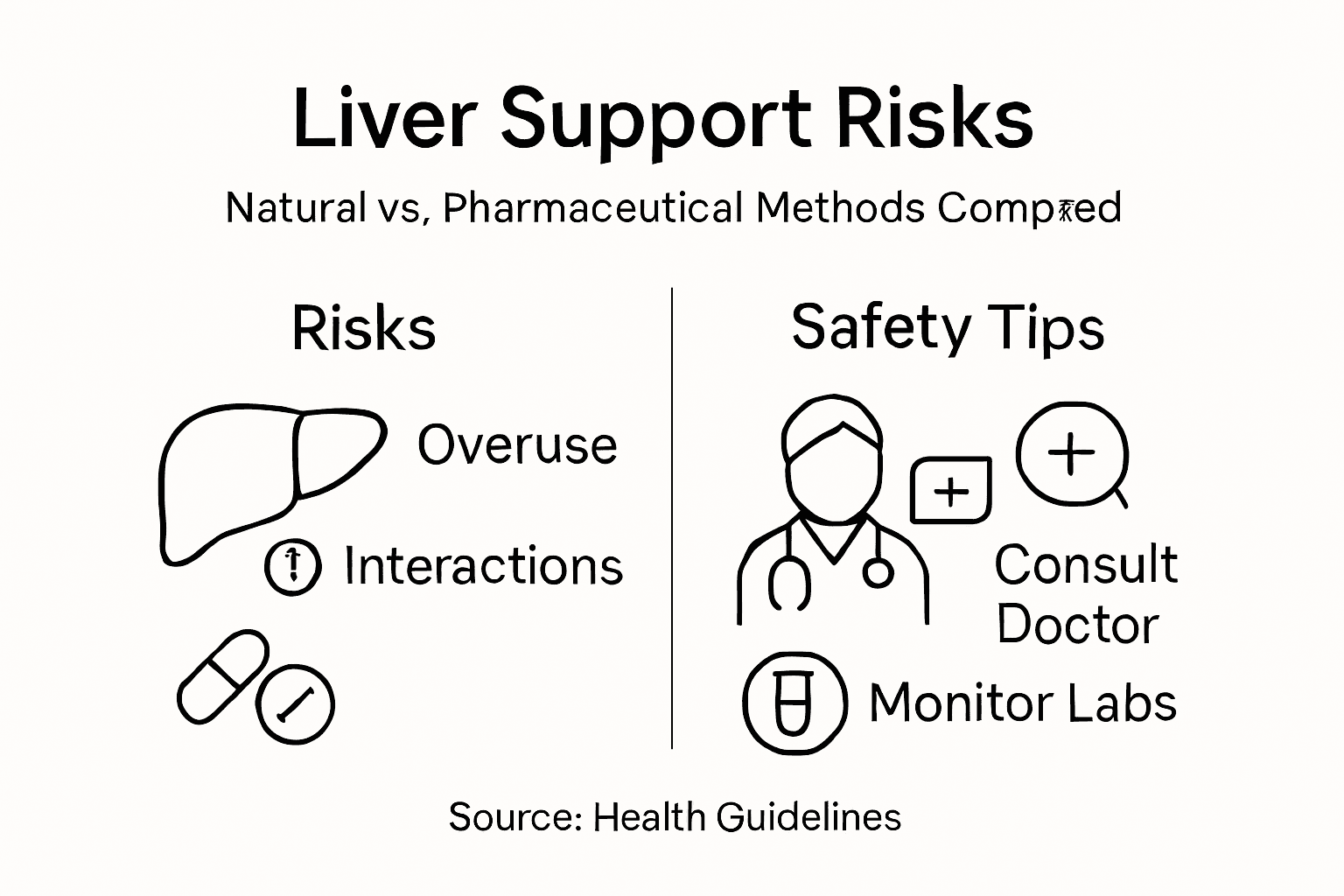
Comparing Natural and Pharmaceutical Approaches
Liver support strategies involve a complex interplay between natural and pharmaceutical interventions. Natural products offer unique hepatoprotective mechanisms that complement traditional medical treatments, presenting a nuanced approach to liver wellness.
Key differences between natural and pharmaceutical approaches include:
-
Natural Product Characteristics
- Plant-based phytochemicals
- Typically lower side effect profiles
- Variable bioavailability
- Holistic health support
-
Pharmaceutical Intervention Features
- Precisely controlled dosing
- Targeted molecular mechanisms
- Standardized clinical testing
- More predictable outcomes
-
Complementary Strategies
- Integrated treatment protocols
- Personalized health management
- Synergistic healing approaches
- Comprehensive wellness perspective
The pharmaceutical approach typically provides more controlled and quantifiable results, with standardized dosing and extensive clinical research. Natural approaches, while sometimes less predictable, offer broader systemic support and potentially fewer side effects.
The table below highlights how natural and pharmaceutical liver support methods differ in application and benefits:
| Aspect | Natural Products | Pharmaceuticals |
|---|---|---|
| Source | Plant-based and dietary | Synthetically produced |
| Side Effect Risk | Typically milder | Can be more pronounced |
| Clinical Testing | Less standardized | Extensive clinical trials |
| Suitability | General wellness promotion | Specific liver conditions |
Optimal liver health emerges from a balanced, integrated approach combining natural and medical strategies.
Considerations for selecting an approach:
- Individual health status
- Specific liver condition
- Potential interaction risks
- Personal metabolic profile
- Long-term health goals
Pro tip: Consult healthcare professionals to develop a personalized liver support strategy that intelligently combines natural and pharmaceutical interventions.
Common Mistakes and What to Avoid
Liver support requires careful navigation to avoid common pitfalls that can compromise overall health. Critical management mistakes often undermine liver wellness and can lead to long-term complications if not addressed proactively.
Common mistakes in liver support strategies include:
-
Nutritional Errors
- Ignoring personalized dietary needs
- Inconsistent nutrient intake
- Overlooking protein requirements
- Neglecting micronutrient balance
-
Supplementation Mistakes
- Self-prescribing without professional guidance
- Excessive or inappropriate dosing
- Ignoring potential interactions
- Using low-quality supplements
-
Lifestyle Missteps
- Inconsistent health monitoring
- Chronic stress management failures
- Inadequate sleep patterns
- Neglecting overall metabolic health
Nutritional management requires comprehensive patient assessment to prevent potential health complications. Many individuals mistakenly believe that generic approaches work universally, when in fact liver support demands a highly individualized strategy.
Prevention is more effective than correction when managing liver health.
Strategic steps to avoid common liver support mistakes:
- Consult healthcare professionals regularly
- Undergo comprehensive metabolic screenings
- Develop personalized nutrition plans
- Monitor supplement interactions
- Maintain consistent lifestyle habits
Pro tip: Create a detailed health journal tracking your diet, supplement intake, and physical responses to develop a more targeted liver support approach.
Take Control of Your Liver Health with Trusted Support
Understanding the critical role your liver plays in detoxification and overall wellness is the first step toward better health. This article highlights common challenges like silent liver damage, nutrient deficiencies, and the importance of comprehensive liver support through antioxidants, essential vitamins, and lifestyle changes. If you are searching for safe, effective ways to support your liver and enhance natural detoxification, integrating scientifically backed supplements into your routine can make a significant difference.
Strengthen your body’s main detox organ with pharmaceutical-grade supplements from Mahoney Inter. Our curated selection includes powerful liver support complexes, TUDCA, NAC, and natural extracts to optimize all three detoxification phases mentioned in the article. Act now to start protecting your liver silently working to keep you healthy. Visit Mahoney Inter today and discover our full range of liver support solutions designed for your unique wellness journey.
Frequently Asked Questions
What are the key benefits of liver support?
Liver support helps maintain optimal liver function, aids in detoxification, and protects against damage from toxins and environmental stressors. It promotes healthy metabolism and nutrient processing, contributing to overall wellness.
How can natural supplements support liver health?
Natural supplements like silymarin (milk thistle), curcumin, and antioxidants protect liver cells from damage, reduce inflammation, and support detoxification processes. Combining these with a healthy lifestyle enhances their effectiveness.
What dietary changes can improve liver wellness?
Incorporating antioxidant-rich foods, reducing processed food intake, staying hydrated, and ensuring a balanced diet with adequate proteins, fats, and carbohydrates can significantly improve liver health and support detox functions.
How does detoxification occur in the liver?
Detoxification is a multi-phase process involving enzymatic modifications, conjugation, and elimination of toxins. Key nutrients like B-complex vitamins and antioxidants facilitate these phases, ensuring harmful substances are safely processed and removed from the body.
Recommended
- Liver Support Explained: Benefits, Types, and Safety – Mahoney inter
- 7 Essential Liver Health Supplements List for Detox Support – Mahoney inter
- 7 Best Liver Detox Herbs for Natural Purification – Mahoney inter
- How to Detox Liver Naturally for Optimal Health – Mahoney inter
- 7 Effective Ways to Relax Your Mind Naturally – Mastering Conflict