What Are Herbal Supplements? How Plant-Based Ingredients Become Wellness Products
Herbal supplements have become a common part of many wellness routines, but terms like botanical ingredients, plant-based formulas, herbal extracts,

If you have started taking milk thistle and noticed a change in your ALT or AST results, you may wonder whether the supplement is responsible. Milk thistle is widely used for liver support, but the more useful question is whether it can lower liver enzymes, raise them, and what those changes actually mean.
Most research focuses on silymarin, the main bioactive extract from milk thistle (Silybum marianum). Studies examining milk thistle and liver enzymes have produced mixed results. Some report lower ALT and AST levels, others show little change, and a smaller number report increases. The effect appears to depend partly on the underlying condition, dose, formulation, and individual response.
Research suggests that silymarin may lower ALT, AST, or other liver-enzyme markers in some people, but it does not produce the same result in everyone.
A systematic review of 29 randomized clinical trials involving 3,846 participants found that 19 studies (65.5%) reported decreases in liver enzymes. Six studies (20.7%) found no significant change, while four (13.8%) reported increases.
The trials involved people with several different underlying conditions, which helps explain why the findings were not identical.
These results suggest a possible beneficial effect of silymarin on biochemical liver markers, but they do not establish that milk thistle will normalize elevated enzymes in every person.
ALT and AST are commonly included in liver blood tests, but they are better thought of as markers of cell stress or injury rather than direct measurements of how well the liver functions.
ALT (alanine aminotransferase) is found mainly in the liver. When liver cells become stressed or damaged, ALT can enter the bloodstream, causing blood levels to rise. Because ALT is relatively liver-specific, it is commonly used when evaluating possible liver injury.
AST (aspartate aminotransferase) is also found in the liver, but it occurs in muscles and other tissues as well. This means an elevated AST result can sometimes be related to intense exercise, muscle injury, or another non-liver cause.
Older laboratory reports may use SGPT for ALT and SGOT for AST.
An abnormal ALT or AST result is not a diagnosis by itself. Healthcare professionals interpret these markers alongside symptoms, medical history, medications, other laboratory results, and sometimes imaging.
Silymarin is the milk thistle extract most frequently studied for its potential effects on liver health. Clinical trials have evaluated its influence on several biochemical markers, including ALT, AST, and alkaline phosphatase (ALP).
Research does not show a universal response.
| Research Finding | What It May Mean |
| Some studies reported lower ALT or AST | Possible improvement in biochemical markers |
| Some found no significant change | Response is not universal |
| Some reported increased enzymes | Results can vary by condition and context |
| Liver enzymes improve | Does not prove the underlying liver condition is cured |
Differences between studies may reflect the type of liver condition being investigated, silymarin dosage, formulation, treatment duration, medications used alongside it, and individual characteristics.
Therefore, changes in silymarin and liver enzyme levels should be interpreted as biochemical findings rather than proof of a guaranteed therapeutic benefit.
Some clinical research has reported lower ALT levels following silymarin supplementation, particularly in studies involving metabolic or fatty-liver conditions.
However, this does not mean milk thistle will automatically lower high ALT or return an elevated result to the normal range.
High ALT can have many possible causes, including alcohol use, medications, metabolic conditions, viral infections, excess liver fat, and other forms of liver-cell stress.
Because the underlying cause matters, two people with similar ALT readings may respond very differently.
For that reason, the question “does milk thistle lower ALT?” cannot be answered with a guaranteed yes. Research suggests it may reduce ALT in certain groups, but elevated ALT should still be evaluated in the context of the person’s overall health.
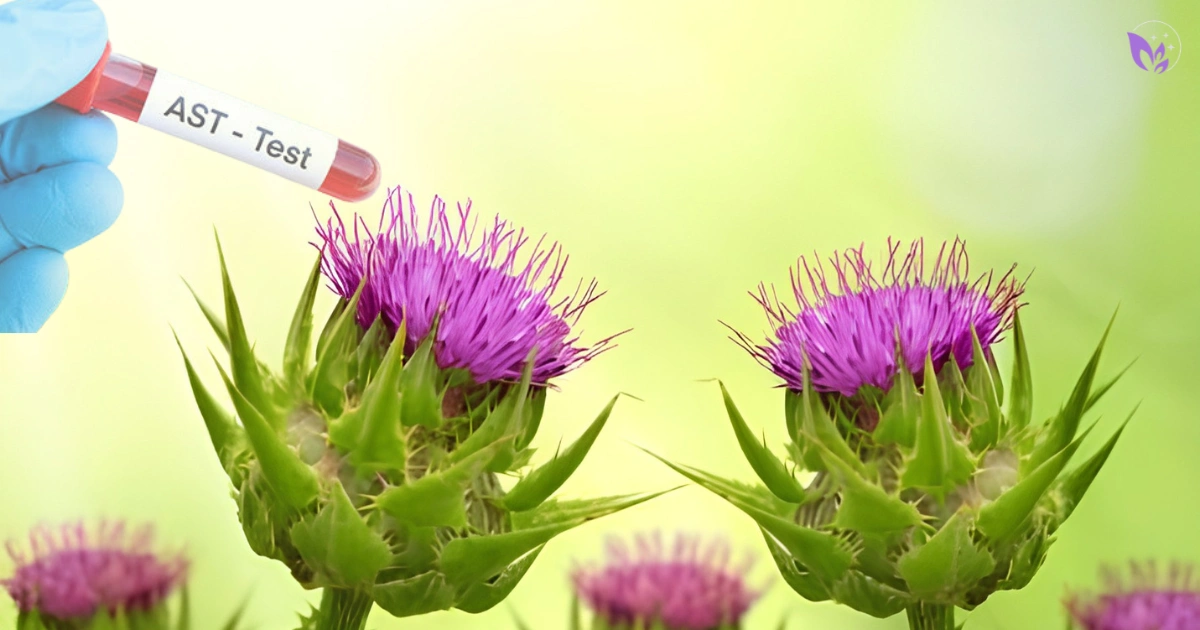
Some studies have also reported reductions in AST following milk thistle or silymarin liver enzyme use.
However, milk thistle AST levels can be more difficult to interpret because AST is less liver-specific than ALT. Strenuous exercise, muscle injury, and other conditions affecting muscle tissue may increase AST even when the liver is not the main cause.
A falling AST result may be encouraging when other abnormal liver markers are also improving, but one AST value alone cannot show whether a supplement is working.
Similarly, an increase in AST after starting milk thistle does not automatically mean the supplement caused liver damage.
This is an important question for anyone who notices elevated liver enzymes after beginning a new supplement.
When it comes to milk thistle and liver safety, standard oral milk thistle use has not generally been associated with serum liver-enzyme elevations or clinically apparent acute liver injury. It is considered an unlikely cause of clinically significant liver injury based on currently available evidence.
However, that does not mean every increase in ALT or AST should be ignored.
Liver test results can change because of medications, alcohol, other supplements, infections, metabolic conditions, exercise, or progression of an underlying condition. Timing alone cannot prove that milk thistle caused the change.
Anyone who develops unexpected or persistently abnormal results should review them with a qualified healthcare professional rather than assuming the supplement is responsible.
Milk thistle and silymarin have been studied in people with metabolic dysfunction-associated steatotic liver disease (MASLD), previously commonly called non-alcoholic fatty liver disease or NAFLD.
Some clinical trials involving fatty liver have reported improvements in ALT and AST. This is one reason searches for milk thistle fatty liver, silymarin fatty liver, and milk thistle fatty liver enzymes are closely connected.
However, improved liver enzymes do not necessarily mean liver fat, inflammation, or fibrosis has disappeared.
ALT and AST are biochemical markers. Structural changes in the liver may require other forms of assessment, such as imaging or additional testing.
For people with fatty liver, lifestyle changes and appropriate medical management therefore remain important regardless of whether milk thistle affects their enzyme levels.
Not necessarily.
Lower ALT and AST can sometimes be an encouraging sign, particularly when previously elevated results begin moving toward the reference range. But biochemical improvement is not the same as confirmed reversal of liver disease.
Someone may have improving liver enzymes while still having excess liver fat, inflammation, or fibrosis. Conversely, liver enzyme levels can sometimes remain within the reference range even when an underlying condition is present.
Doctors therefore look at the larger clinical picture rather than relying on one ALT or AST result.
Changes in milk thistle liver function markers should be viewed as one part of that picture, not as proof that the liver has completely healed.
Many factors besides milk thistle can affect ALT and AST, including:
Supplements can also affect laboratory testing in different ways. Some cause genuine biological changes, while others may interfere with how particular laboratory tests are measured.
If you regularly use vitamins, minerals, herbal products, or other supplements, read more about how supplements may affect blood-test results and make sure your healthcare provider knows what you take.

Milk thistle is only one ingredient commonly discussed in relation to liver support.
Silymarin is mainly studied for its antioxidant, anti-inflammatory, and potential liver-cell protective effects. Other ingredients may work through different biological pathways.
For example, TUDCA is commonly discussed in relation to bile acids and bile-flow-related processes, making its proposed mechanism different from that of silymarin.
If you are comparing the two ingredients, see the detailed guide to TUDCA vs milk thistle rather than assuming they provide identical forms of support.
Research on milk thistle and liver enzymes suggests that silymarin may help lower ALT and AST in some people, particularly in certain liver-related conditions. Still, the effect is neither guaranteed nor universal.
Standard milk thistle use is not commonly linked to increased liver enzymes or acute liver injury. Still, any unexpected rise in ALT or AST deserves proper interpretation because medications, alcohol, exercise, other supplements, and underlying health conditions can all influence the results.
Ultimately, liver enzyme changes are useful clues rather than a complete measure of liver health. Anyone with persistent or significant abnormalities should discuss the results with a qualified healthcare professional rather than relying on a supplement alone.
Some studies report reductions in ALT after silymarin supplementation, particularly in certain liver-related conditions. However, the effect is not consistent enough to guarantee that milk thistle will lower ALT for everyone.
Milk thistle or silymarin has been associated with lower AST in some clinical trials. AST can also be affected by muscles and other tissues, so changes should be interpreted alongside other test results.
Standard milk thistle use is not commonly associated with elevated liver enzymes or clinically apparent liver injury. If ALT or AST increases while taking it, other possible causes should also be investigated.
Milk thistle is not generally considered a typical cause of elevated ALT at standard use levels. However, individual laboratory changes require proper evaluation rather than assuming any one supplement is responsible.
Yes. Research has investigated silymarin’s effects on ALT, AST, ALP, and other biochemical liver markers. Results vary between studies and between different patient populations.
Some studies involving people with fatty liver have reported improvements in ALT and AST after silymarin use. This does not prove that liver fat, inflammation, or fibrosis has been reversed.
A lower ALT can be encouraging, but it cannot confirm liver recovery on its own. Liver health is assessed using medical history, multiple laboratory markers, and sometimes imaging or other diagnostic tests.
This article is for informational purposes only and is not intended to diagnose, treat, cure, or prevent any medical condition. Speak with a qualified healthcare professional about abnormal liver tests or before starting a new supplement.


Noor-ul-Ain is a Tech & SEO Content Writer with over 4 years of experience creating search-optimized content for digital platforms. She specializes in SaaS products, AI tools, SEO strategy, and product documentation, helping platforms turn complex features into clear, search-driven growth. Noor-ul-Ain has also written extensively on health science, sports, fitness, fashion, and beauty, focusing on informative and reader-friendly content.
Herbal supplements have become a common part of many wellness routines, but terms like botanical ingredients, plant-based formulas, herbal extracts,

If you’ve spent any time browsing wellness supplements online, you’ve probably come across names like Paragon, TNM, and TRACE without
Choosing a supplement today is often more complicated than picking a single nutrient. Many modern formulas combine multiple ingredient categories,