

Most American adults are surprised to learn that nearly 60 percent of detox myths stem from marketing hype rather than actual science. When you seek natural ways to support liver health and detoxification, knowing truth from fiction is vital for lasting wellness. This guide uncovers how nutrient-rich foods—backed by real research—help optimize your body’s detox pathways, empowering health-minded individuals to make smarter nutritional choices worldwide.
Table of Contents
- Defining Detox-Supporting Foods And Common Myths
- Key Nutrients That Enhance Detox Pathways
- Best Food Categories For Liver And Gut Support
- How Detox Foods Benefit Your Body’s Processes
- Risks, Myths, And What To Avoid With Detox Diets
Key Takeaways
| Point | Details |
|---|---|
| Detoxification is Natural | The body effectively detoxifies through the liver, kidneys, and digestive system without the need for supplements or extreme diets. |
| Myths Surrounding Detox | Common myths about rapid toxin elimination through diets can lead to health risks, including nutrient deficiencies and metabolic disruption. |
| Support with Whole Foods | Incorporating a variety of nutrient-dense foods can support the body’s natural detox pathways and overall health. |
| Balanced Approach is Key | Sustainable health is achieved through balanced nutrition, hydration, and supporting the body’s innate detox processes rather than extreme detox regimens. |
Defining Detox-Supporting Foods and Common Myths
Detoxification represents a complex biological process where the human body naturally eliminates harmful substances through sophisticated metabolic mechanisms. Contrary to popular marketing claims, true detoxification occurs primarily through the liver, kidneys, digestive system, and lymphatic network, not through expensive supplements or extreme diets. Scientific research on detox mechanisms consistently demonstrates that our internal systems are remarkably efficient at processing and removing toxins without external intervention.
Most detox myths originate from misunderstandings about how human metabolism actually functions. Many people believe consuming specific foods or following restrictive diets can rapidly purge the body of accumulated toxins. However, authentic detoxification is a continuous, complex process involving multiple organ systems working synergistically. Foods can support these natural mechanisms, but they cannot dramatically accelerate or fundamentally transform the body’s established detoxification pathways.
Certain nutritional choices do play a supportive role in maintaining optimal liver function and overall metabolic health. Nutrient-dense foods like cruciferous vegetables, leafy greens, garlic, turmeric, and berries contain compounds that can enhance the body’s natural detoxification processes. Comprehensive detox research indicates that while these foods provide valuable micronutrients, they work subtly to support existing biological systems rather than performing a dramatic “cleansing” effect.
Pro tip: Focus on consuming a balanced, whole-food diet rich in diverse nutrients and stay consistently hydrated to naturally support your body’s innate detoxification mechanisms.
Key Nutrients That Enhance Detox Pathways
Detoxification is a nuanced biochemical process that relies heavily on specific nutrients to support the body’s natural elimination mechanisms. Advanced metabolic research reveals that targeted nutritional compounds play a critical role in activating and sustaining liver detoxification pathways. The human body requires a complex array of vitamins, minerals, and antioxidants to efficiently process and neutralize harmful substances.

Critical B-complex vitamins form the foundation of effective detoxification processes. Specifically, B2, B3, B6, B9 (folate), and B12 are essential for supporting enzymatic functions that transform toxins into less harmful compounds. These vitamins work synergistically to facilitate metabolic reactions, with each playing a unique role in liver supportive nutrient mechanisms. Glutathione, often called the body’s master antioxidant, emerges as a key player in protecting cellular structures from oxidative stress during detoxification.
The most potent detox-supporting nutrients can be categorized into several key groups. Antioxidant-rich foods like berries, dark leafy greens, and cruciferous vegetables provide powerful compounds that enhance the body’s natural cleansing processes. Minerals such as selenium, zinc, and magnesium support crucial enzymatic reactions, while amino acids help synthesize proteins necessary for efficient toxin removal. Specific phytonutrients found in garlic, turmeric, and green tea demonstrate remarkable capabilities in stimulating liver enzyme production and neutralizing free radicals.
Pro tip: Incorporate a diverse range of colorful, whole foods into your diet to provide a comprehensive spectrum of detox-supporting nutrients and support your body’s natural cleansing mechanisms.
Here’s a summary of key nutrients, their detox functions, and food sources:
| Nutrient Category | Detoxification Role | Common Food Sources |
|---|---|---|
| B-Complex Vitamins | Support enzymatic toxin breakdown | Leafy greens, legumes |
| Antioxidants | Reduce oxidative stress in cells | Berries, dark greens |
| Essential Minerals | Aid metabolic enzyme activity | Nuts, seeds, whole grains |
| Phytonutrients | Enhance liver detox enzyme production | Garlic, turmeric, green tea |
| Omega-3 Fatty Acids | Lower inflammation, support liver health | Fatty fish, walnuts |
Best Food Categories for Liver and Gut Support
Comprehensive liver and gut health strategies demonstrate that nutrition plays a pivotal role in supporting metabolic function and detoxification. The human body relies on specific food categories to maintain optimal liver performance and gut microbiome balance. Understanding these nutritional pathways can transform how we approach dietary choices for long-term wellness.
Crucial food categories that support liver and gut health include antioxidant-rich options like berries, cruciferous vegetables, and fatty fish. These nutrient-dense foods provide essential compounds that help reduce inflammation and support enzymatic detoxification processes. Specific dietary research highlights the importance of incorporating whole foods that actively contribute to metabolic health, with particular emphasis on foods that can lower liver enzyme levels and promote cellular regeneration.
The Mediterranean diet emerges as a gold standard for liver and gut support, characterized by its emphasis on whole grains, legumes, vegetables, and healthy fats. Key food groups that demonstrate remarkable liver-protective properties include:
- Cruciferous vegetables (broccoli, cauliflower, brussels sprouts)
- Berries and citrus fruits rich in antioxidants
- Fatty fish containing omega-3 fatty acids
- Nuts and seeds with anti-inflammatory properties
- Green tea and coffee with protective metabolic compounds
These nutritional powerhouses work synergistically to support the body’s natural detoxification mechanisms, reduce oxidative stress, and maintain optimal liver and gut function.
Pro tip: Aim to include at least three different colors of vegetables and fruits in your daily diet to maximize nutritional diversity and support comprehensive liver and gut health.
How Detox Foods Benefit Your Body’s Processes
The human body’s intricate detoxification systems operate through complex biochemical pathways that can be significantly supported by targeted nutritional interventions. Groundbreaking phytonutrient research demonstrates how specific whole-food compounds can enhance enzymatic activities, effectively protecting cells from oxidative stress and supporting metabolic homeostasis.
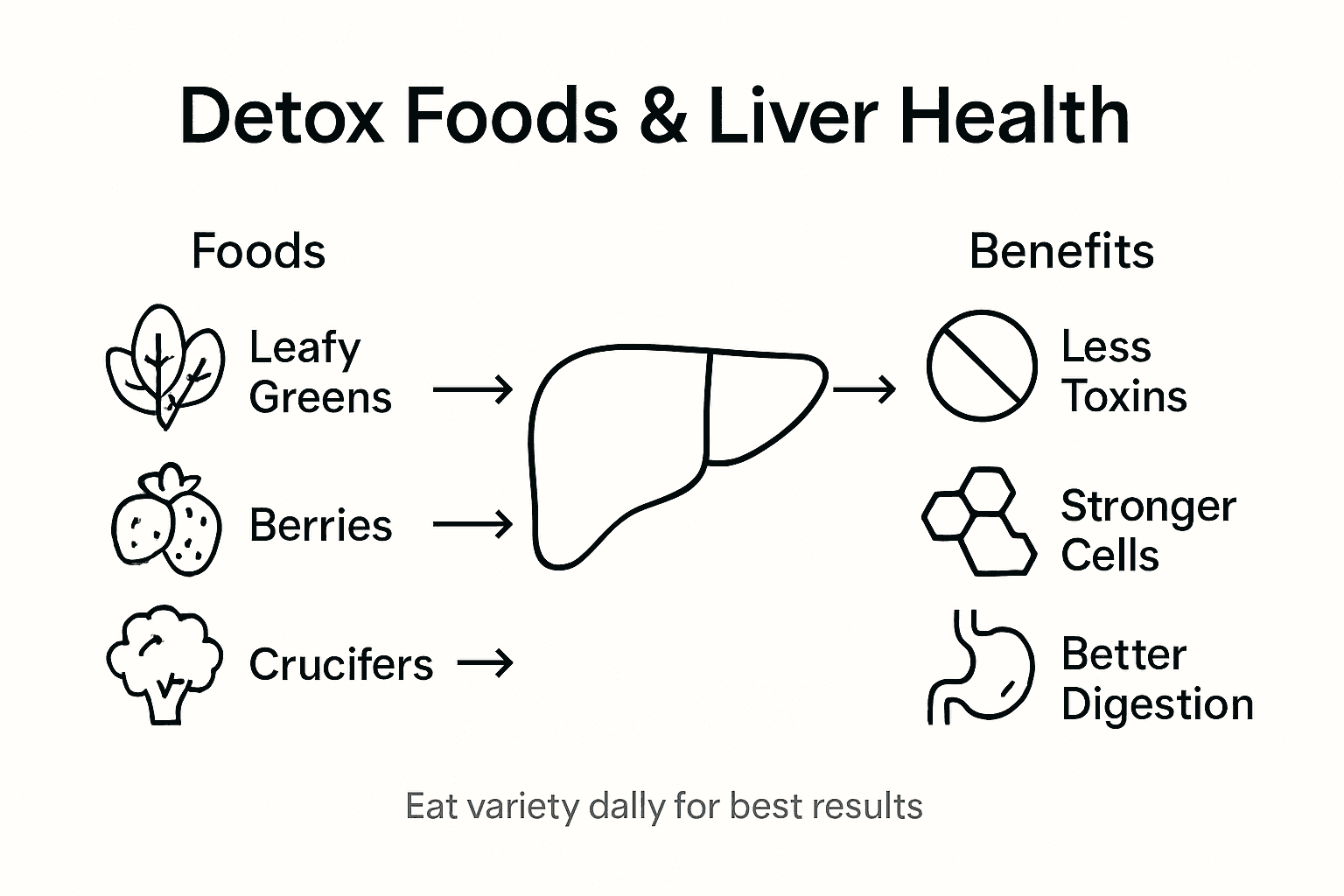
Detox foods work by activating critical cellular defense mechanisms that neutralize harmful compounds and support the body’s natural elimination processes. These nutritional powerhouses stimulate key enzymes like superoxide dismutase and glutathione S-transferase, which play crucial roles in breaking down and removing toxic substances. The biological transformation occurs at the cellular level, where antioxidant-rich foods help reduce reactive oxygen species and strengthen the body’s natural detoxification pathways.
The primary mechanisms through which detox foods benefit bodily processes include:
- Enzymatic Activation: Stimulating liver enzymes that neutralize toxins
- Oxidative Stress Reduction: Protecting cells from free radical damage
- Metabolic Optimization: Supporting efficient energy production and waste elimination
- Cellular Repair: Providing nutrients that help regenerate and protect cellular structures
- Inflammation Suppression: Reducing chronic inflammatory responses
By incorporating a diverse range of nutrient-dense foods, individuals can support their body’s innate ability to process and eliminate harmful substances more effectively, promoting overall metabolic health and resilience.
Pro tip: Choose foods with deep, vibrant colors like dark leafy greens, berries, and orange vegetables, as these typically indicate the highest concentration of protective phytonutrients.
Risks, Myths, and What to Avoid with Detox Diets
Comprehensive research on detox practices reveals a critical disconnect between marketing claims and scientific understanding. Detox diets often perpetuate dangerous myths about the body’s natural elimination processes, suggesting that external interventions are necessary to remove toxins. In reality, the human body possesses highly sophisticated detoxification systems primarily managed by the liver, kidneys, and digestive tract.
Numerous detox myths can potentially harm health and create unrealistic expectations. Common misconceptions include believing that extreme fasting, juice cleanses, or restrictive diets can rapidly purge the body of accumulated toxins. These approaches can actually disrupt metabolic function, causing dehydration, electrolyte imbalances, and nutrient deficiencies. Scientific investigations into detox protocols consistently demonstrate that such practices can be more damaging than beneficial.
Key risks and myths associated with detox diets include:
- Myth: Detox diets can quickly eliminate all toxins
- Reality: Natural organs already manage toxin removal efficiently
- Risk: Extreme calorie restriction can slow metabolism
- Danger: Potential electrolyte imbalances and nutrient deficiencies
- Concern: Disruption of healthy gut microbiome
- Warning: Potential kidney and liver stress from aggressive protocols
Healthcare professionals emphasize that sustainable wellness comes from balanced nutrition, consistent hydration, and supporting the body’s inherent detoxification mechanisms through whole foods and healthy lifestyle choices.
The table below compares popular detox myths with scientific facts and actual risks:
| Myth or Claim | Scientific Reality | Actual Risk |
|---|---|---|
| Extreme fasting removes toxins | Organs detoxify naturally | Slowed metabolism |
| Juice cleanses are essential | No evidence of rapid cleanse effect | Nutrient deficiency |
| Supplements needed for detox | Whole foods are sufficient | Possible kidney/liver stress |
| Rapid toxin removal is possible | Detoxification is continuous | Dehydration, imbalances |
Pro tip: Prioritize whole, unprocessed foods and maintain consistent hydration instead of pursuing extreme detox regimens that can potentially harm your metabolic health.
Support Your Body’s Natural Detox with Targeted, Pharmaceutical-Grade Supplements
The article highlights the crucial role of nutrient-dense foods in enhancing natural detoxification processes, especially for liver health. Yet, even a balanced diet can sometimes fall short when metabolic stress, environmental toxins, or parasites challenge your body’s efficiency. Many face struggles such as sluggish detox pathways, oxidative stress, or the need for precision support in enzymatic functions. These challenges can hinder your goals of achieving optimal liver function and comprehensive metabolic balance.

Elevate your wellness journey by combining the power of whole foods with scientifically formulated supplements available at Mahoney Inter. Our selection includes trusted options like TUDCA for liver support, NAC for glutathione enhancement, and proven parasite cleanse products to reduce toxin load. These natural yet pharmaceutical-grade solutions help you activate your body’s enzymatic detox pathways safely and effectively. Act now to experience better liver health and metabolic clarity. Explore our range and start supporting your body today at Mahoney Inter, your reliable source for holistic and science-backed detox protocols.
Frequently Asked Questions
What foods help support liver detoxification?
Nutrient-dense foods that support liver detoxification include cruciferous vegetables (like broccoli and cauliflower), leafy greens, garlic, turmeric, berries, and fatty fish. These foods contain compounds that enhance the body’s natural detox mechanisms.
How do antioxidants benefit liver health?
Antioxidants found in foods like berries and dark leafy greens help reduce oxidative stress in the liver. They neutralize free radicals and promote cellular health, which is crucial for efficient detoxification processes.
What role do B-complex vitamins play in detoxification?
B-complex vitamins, particularly B2, B3, B6, B9 (folate), and B12, are essential for supporting enzymatic functions in the liver that transform toxins into less harmful compounds, playing a vital role in the detoxification process.
How can I support my body’s detoxification processes daily?
To support detoxification, focus on consuming a balanced diet rich in whole foods, including a variety of colorful fruits and vegetables, adequate hydration, and regular physical activity. This will help maintain optimal liver function and promote general metabolic health.