

Most American adults underestimate how powerful a natural parasite cleanse can be when tackling chronic inflammation and promoting liver health. With over 20 million people globally affected by parasite-related conditions each year, finding safe holistic solutions matters more than ever. Understanding parasite die-off is key for those seeking true detoxification and vibrant wellness, especially if you face liver concerns or cancer. Discover how your body’s natural healing response signals real progress on your wellness journey.
Table of Contents
- What Parasite Die-Off Really Means
- Recognizing Common Die-Off Symptoms
- Why Die-Off Symptoms Occur
- How Parasite Cleanse Protocols Trigger Die-Off
- Managing Die-Off Safely During Detox
- Reducing Risks and Supporting Liver Health
Key Takeaways
| Point | Details |
|---|---|
| Understanding Die-Off | Parasite die-off, marked by the Jarisch-Herxheimer reaction, signifies the effectiveness of antiparasitic treatments and triggers an intense immune response. |
| Common Symptoms | Symptoms such as fatigue, digestive issues, and skin reactions indicate the body’s effort to eliminate toxins from dying parasites. |
| Managing Detoxification | Support detoxification by staying hydrated, consuming nutrient-dense foods, and monitoring symptoms to ease die-off reactions. |
| Liver Support | Prioritize liver health through antioxidants and lifestyle modifications to enhance the body’s ability to process toxins during parasite elimination. |
What Parasite Die-Off Really Means
Parasite die-off represents a complex physiological response that occurs when antiparasitic treatments rapidly eliminate harmful organisms from the body. This biological process, scientifically known as the Jarisch-Herxheimer reaction, indicates your treatment is working effectively while simultaneously challenging your immune system. Specific symptoms of parasite die-off emerge as the body processes and eliminates the remnants of destroyed parasitic organisms.
The die-off reaction happens when antiparasitic interventions cause parasites to break down quickly, releasing toxins and cellular debris into your bloodstream. This sudden release triggers an intense immune response characterized by the production of cytokines and inflammatory mediators. Your body essentially goes into overdrive, working to neutralize and eliminate these released toxins, which can temporarily overwhelm your natural detoxification pathways.
During this process, individuals might experience flu-like symptoms such as fatigue, body aches, headaches, and temporary increases in gastrointestinal discomfort. These reactions, while uncomfortable, actually signify that your immune system is actively fighting and clearing parasitic infections. The Jarisch-Herxheimer response demonstrates that healing is not always linear and can involve challenging transitional periods.
Pro tip: Support your body’s detoxification process during parasite die-off by staying hydrated, getting adequate rest, and consuming nutrient-dense foods that enhance liver function and immune response.
Recognizing Common Die-Off Symptoms
Parasite die-off triggers a complex array of symptoms that signal your body is actively fighting and eliminating harmful organisms. Common inflammatory responses can manifest across multiple body systems, creating a challenging but ultimately healing process. These symptoms represent your immune system’s intense effort to clear out parasitic infections and restore overall health.
The most prevalent die-off symptoms typically cluster into several distinct categories. Physical symptoms often include flu-like experiences such as fatigue, body aches, low-grade fever, and chills. Digestive disturbances are particularly common, with individuals experiencing bloating, gas, abdominal pain, diarrhea, or constipation. Systemic inflammatory responses can also trigger neurological and mood-related challenges like brain fog, difficulty concentrating, increased irritability, and temporary anxiety.
Skin reactions frequently accompany parasite die-off, manifesting as unexplained rashes, itching, or other dermatological changes. These external symptoms often indicate your body’s detoxification processes are working to eliminate toxins released during parasite elimination. The intensity and duration of these symptoms can vary significantly depending on individual health status, parasite load, and the specific treatment protocol being used.

Here’s a summary of how different body systems are affected during parasite die-off:
| Body System | Common Response | Why It Happens |
|---|---|---|
| Immune System | Inflammatory cytokines surge | Responds to toxins from dying parasites |
| Digestive System | Bloating, diarrhea, discomfort | Toxins irritate the gut and alter digestion |
| Nervous System | Brain fog, mood swings | Toxins disrupt neurological signaling |
| Skin | Rashes, itching, irritation | Toxins are expelled through sweat/skin |
Pro tip: Document your die-off symptoms in a journal to help track your progress and identify patterns, which can provide valuable insights for your healthcare provider during follow-up consultations.
Why Die-Off Symptoms Occur
Parasite die-off symptoms emerge from a complex biological defense mechanism triggered when harmful organisms are rapidly eliminated from the body. The immune system’s inflammatory response activates as parasites break down, releasing a cascade of toxins, endotoxins, and metabolic byproducts directly into the bloodstream. This sudden toxic release creates an intense physiological challenge that overwhelms the body’s natural detoxification processes.
When parasites die, they release specific compounds like ammonia and acetaldehyde that provoke a dramatic immune reaction. The Jarisch-Herxheimer reaction represents this complex inflammatory response, characterized by the production of cytokines and inflammatory mediators. These biochemical signals flood the system, causing the body to work overtime in an effort to neutralize and eliminate the sudden influx of toxic debris released by dying parasitic organisms.
The intensity of die-off symptoms directly correlates with the individual’s parasite load, overall health status, and the efficiency of their detoxification organs. Liver and kidney function play crucial roles in processing and eliminating these toxins, which explains why some individuals experience more pronounced symptoms than others. The body essentially enters a temporary state of heightened immune activity, working to clear out accumulated parasitic waste and restore systemic balance.
Pro tip: Support your body’s detoxification process by staying hydrated, consuming nutrient-dense foods rich in antioxidants, and getting adequate rest to help manage die-off symptoms more effectively.
How Parasite Cleanse Protocols Trigger Die-Off
Parasite cleanse protocols initiate a complex biological cascade designed to systematically eliminate harmful organisms from the body. Antiparasitic treatments work by targeting specific physiological mechanisms of parasites, causing rapid destruction of these invasive organisms. This targeted approach triggers an immediate immune response as parasites begin to break down, releasing a flood of toxic substances directly into the bloodstream.
The mechanism of die-off involves multiple stages of parasite elimination. Different antiparasitic agents work through various pathways – some inhibit parasitic metabolic processes, while others directly destroy cellular structures. Intense cleanse protocols can cause mass parasite death, which overwhelms the body’s natural detoxification systems. The speed and extent of parasite elimination directly correlate with the intensity of die-off symptoms, making the protocol’s design critical to managing the body’s inflammatory response.
Individual variation plays a significant role in how die-off protocols manifest. Factors such as total parasite load, individual immune system strength, and the specific type of antiparasitic treatment used can dramatically impact the severity of symptoms. Some individuals may experience mild reactions, while others might face more pronounced inflammatory responses as their body works to neutralize and eliminate the toxic debris released by dying parasites.
Pro tip: Gradually introduce antiparasitic protocols and work closely with a healthcare professional to customize your cleanse approach, allowing your body to manage die-off symptoms more effectively.
Managing Die-Off Safely During Detox
Safely navigating parasite die-off requires a strategic approach that supports the body’s natural detoxification systems. Comprehensive detox management involves creating a holistic protocol that minimizes potential adverse reactions while supporting overall healing. The key lies in understanding how to effectively support your body’s elimination pathways during this intense cleansing process.
Hydration and nutritional support form the cornerstone of safe die-off management. Drinking adequate water helps flush toxins through the kidneys, while targeted nutritional interventions support liver function and immune system regulation. Gradual treatment protocols are crucial, allowing the body time to adapt and process the inflammatory response triggered by parasite elimination. This measured approach helps prevent overwhelming the body’s detoxification mechanisms and reduces the intensity of potential die-off symptoms.
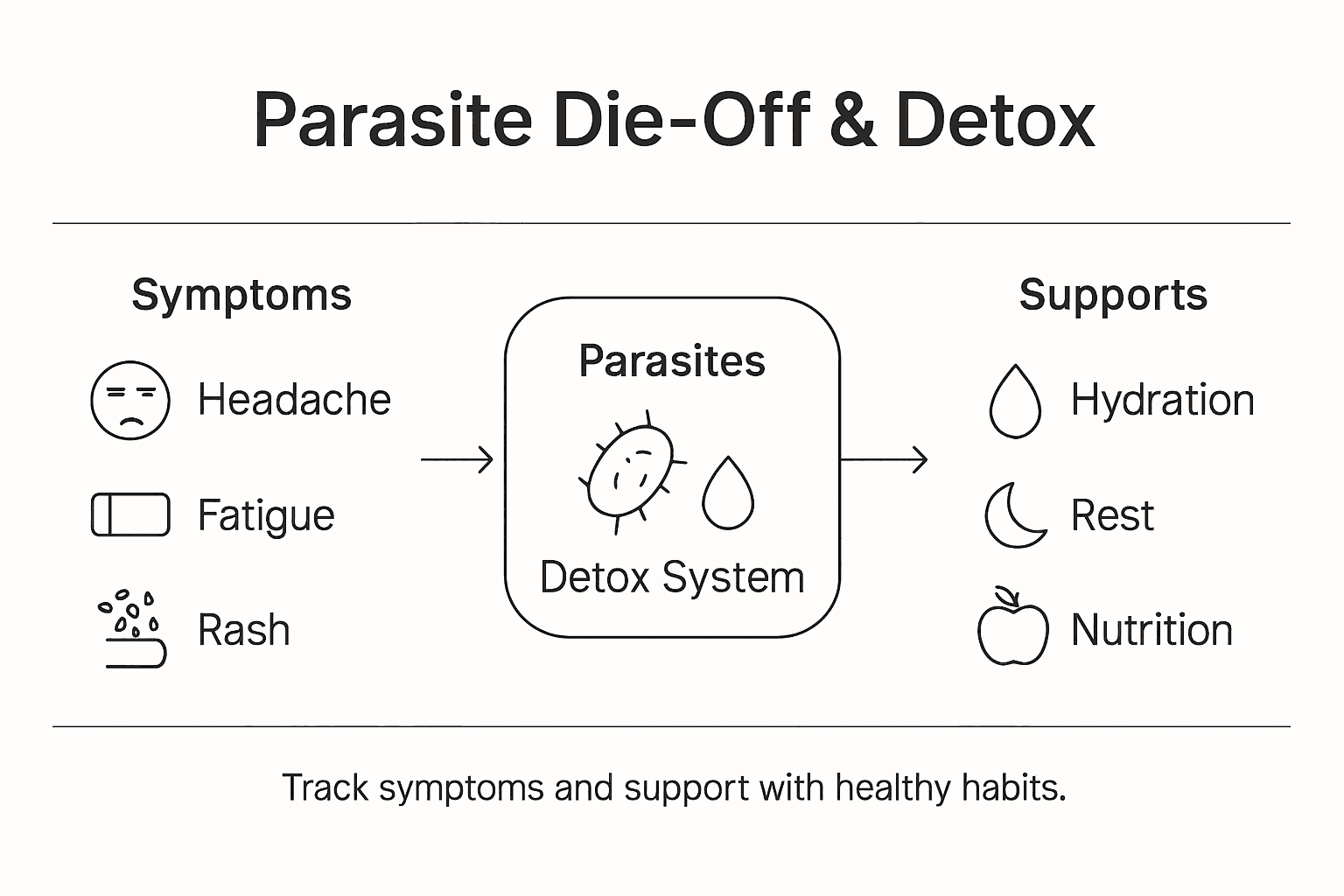
Stress reduction and careful symptom monitoring play equally important roles in managing die-off safely. Implementing stress-management techniques like meditation, gentle exercise, and adequate sleep can significantly support the body’s healing processes. Keeping a detailed symptom journal helps track your progress and identifies any potential areas of concern that may require medical intervention. Practitioners often recommend supporting the detoxification process with targeted supplements, probiotics, and antioxidants to enhance the body’s natural healing capabilities.
Pro tip: Create a personalized die-off support kit with electrolyte supplements, herbal teas, detox-supporting nutrients, and a symptom tracking journal to proactively manage your cleansing journey.
The table below compares key strategies for safely managing parasite die-off:
| Strategy Category | Main Action | Additional Benefit |
|---|---|---|
| Hydration | Drink increased water | Helps flush out released toxins |
| Gradual Treatment | Slowly increase interventions | Minimizes severe reactions |
| Nutritional Support | Eat antioxidant-rich foods | Supports liver and immunity |
| Symptom Tracking | Maintain a symptom journal | Monitors progress and guides care |
Reducing Risks and Supporting Liver Health
Liver health becomes paramount during parasite die-off, as this critical organ bears the primary responsibility for processing and eliminating toxic metabolic byproducts. Comprehensive liver support strategies focus on enhancing the body’s natural detoxification pathways through targeted nutritional interventions and lifestyle modifications. The liver acts as the body’s primary filtration system, working overtime during intense parasite elimination protocols.
Nutritional approaches play a crucial role in supporting liver function during detoxification. Consuming foods rich in antioxidants, sulfur-containing compounds, and specific vitamins helps optimize phase 1 and phase 2 liver detoxification processes. Supplements like milk thistle, N-acetyl cysteine, and glutathione precursors can provide additional support. Strategic liver support protocols also emphasize the importance of B vitamins, vitamin C, and vitamin E in enhancing the liver’s ability to process and neutralize toxins released during parasite elimination.
Beyond nutritional interventions, lifestyle modifications are essential for reducing die-off risks. Stress management, adequate hydration, and minimizing exposure to environmental toxins can significantly enhance liver resilience. Avoiding alcohol, processed foods, and other liver-taxing substances allows the organ to focus its energy on processing parasitic toxins. Regular exercise, quality sleep, and mindful breathing techniques further support the body’s natural detoxification mechanisms and help mitigate the potential negative impacts of parasite die-off.
Pro tip: Create a dedicated liver support routine that includes specific nutrients, herbal supplements, and daily practices designed to enhance your body’s natural detoxification capabilities during parasite elimination.
Take Control of Parasite Die-Off with Trusted Support
Understanding parasite die-off and its challenging symptoms is key to successful detoxification. When your body reacts to the release of toxins from dying parasites, it needs safe, effective support to reduce inflammation and promote liver health. Many individuals struggle with fatigue, digestive upset, and neurological symptoms during this process. That is why a carefully designed parasite cleanse combined with liver support can make all the difference in managing these intense phases and restoring balance.

Experience the confidence of using pharmaceutical-grade supplements crafted to support your body’s natural detox pathways. From powerful antiparasitic agents like ivermectin and fenbendazole to liver detoxifiers such as TUDCA and NAC, Mahoney Inter offers holistic solutions tailored to help you navigate parasite die-off safely and effectively. Don’t wait until symptoms overwhelm you. Visit Mahoney Inter today to explore trusted parasite cleanse bundles and personalized protocols that can transform your detox journey now.
Frequently Asked Questions
What is parasite die-off?
Parasite die-off refers to the rapid elimination of harmful parasites from the body, leading to a release of toxins that can trigger an intense immune response, often known as the Jarisch-Herxheimer reaction.
What are common symptoms of parasite die-off?
Common symptoms include flu-like feelings such as fatigue, body aches, headaches, digestive issues like bloating and diarrhea, as well as neurological symptoms such as brain fog and mood swings.
How can I manage symptoms during parasite die-off?
Managing symptoms can be achieved through hydration, consuming nutrient-dense foods, gradually increasing treatment dosages, and tracking symptoms to communicate with healthcare providers effectively.
Why does parasite die-off cause inflammatory responses?
Inflammatory responses occur due to the release of toxins and metabolic byproducts when parasites die. This sudden influx triggers the immune system to react strongly, leading to various symptoms as the body works to clear the toxins.