

Finding trustworthy detox options can be complicated when every product claims miraculous results. Many health-conscious people wonder if these cleanses are truly necessary or just clever marketing. Your body already has built-in detoxification systems working every day to eliminate harmful substances. This introduction helps you cut through the confusion, spotlighting medical realities versus common misconceptions so you can make smarter choices for long-term wellbeing.
Table of Contents
- Detox Defined: Misconceptions And True Purpose
- Types Of Detox Protocols And Methods
- What The Body Experiences Day By Day
- Physical And Emotional Symptoms During Detox
- Risks, Mistakes, And Safe Supplement Support
Key Takeaways
| Point | Details |
|---|---|
| Understanding Detox | Detoxification refers to natural processes performed by the liver and kidneys, not marketing claims of detox products. |
| Medical vs. Commercial Detox | Medical detox is supervised for serious conditions, while commercial products often lack scientific support and can be harmful. |
| Beware of Misconceptions | Common beliefs about quick fixes or toxin storage are misleading and can lead to dangerous practices. |
| Safe Practices | Consult healthcare professionals before using any detox supplements to avoid risks and ensure safety. |
Detox Defined: Misconceptions and True Purpose
Your body already has built-in systems to remove harmful substances. The liver, kidneys, and digestive tract work constantly to eliminate waste and toxins without any special cleanse or diet required.
But here’s where confusion starts. The term “detox” means very different things depending on who’s using it—and that gap between medical reality and marketing hype matters for your health decisions.
Medical Definition vs. Marketing Claims
In clinical medicine, detoxification refers to treating specific poisonings or overdoses. Doctors use interventions like chelation therapy for heavy metal removal or medical protocols for substance poisoning.
The commercial detox industry, however, sells something entirely different. Detox products promise rapid weight loss, “toxin removal,” and health transformation through juices, supplements, or colon cleanses. These products lack the scientific backing their marketing claims suggest.
Your liver and kidneys already handle toxin removal naturally. When these organs function properly, your body doesn’t need external detox products to work.
Here’s a comparison of medical detoxification and commercial detox products to clarify key differences:
| Aspect | Medical Detoxification | Commercial Detox Products |
|---|---|---|
| Purpose | Treats poisoning or withdrawal | Claims to cleanse or boost health |
| Oversight | Supervised by healthcare providers | Self-administered, little regulation |
| Scientific Evidence | Supported by clinical research | Lacks credible scientific backing |
| Risks | Managed by professionals | May cause side effects or harm |
| Target User | Those with acute toxic exposure | General public seeking quick fixes |
Common Misconceptions That Lead You Astray
Most detox misconceptions revolve around three dangerous beliefs:
- Detoxes can quickly fix health problems – Your body’s healing takes time; no 7-day cleanse reverses years of lifestyle habits
- Detoxes substitute for healthy living – They don’t replace proper nutrition, exercise, and sleep
- Your body stores “toxins” that need flushing – The organs designed for this work continuously without special intervention
The commercial detox industry markets solutions to a problem your body already solves naturally, often without scientific evidence supporting their effectiveness.
Marketed detox programs often encourage practices with hidden risks. Someone might believe a detox justifies excessive drinking, thinking they’ll “cleanse” afterward. This backwards thinking can lead to real health damage rather than improvement.
What Detox Actually Addresses
Real detoxification applies to specific medical situations:
- Heavy metal poisoning (lead, mercury, arsenic)
- Drug or alcohol overdose requiring clinical intervention
- Accidental toxin exposure handled by emergency medicine
These scenarios require proper medical supervision, not retail supplements. The confusion arises because the word “detox” applies to both emergency medical treatment and unproven wellness products.
Understanding how your body’s actual detoxification processes work helps you separate science from marketing.
Why Misconceptions Persist
The detox industry thrives because people want simple solutions to complex health problems. A 3-day juice cleanse feels easier than building sustainable eating habits over months. Marketing exploits this desire, making detoxes sound like health shortcuts.
Pro tip: When evaluating any detox product, ask whether it makes the same claims a pharmaceutical company would need to prove in clinical trials—if yes, demand that same scientific evidence before spending money.
Types of Detox Protocols and Methods
Detox protocols vary dramatically depending on what substance or condition needs treatment. A medical detox for alcohol withdrawal looks completely different from a wellness program claiming to “cleanse” your body of undefined toxins.

Understanding the actual methods available helps you identify which approaches have scientific backing and which are purely marketing.
Medical Detox Approaches
Medical detoxification focuses on safely managing withdrawal symptoms under clinical supervision. This applies primarily to substance dependence, where your body experiences physical withdrawal without proper intervention.
Medical protocols typically include:
- Medication-assisted detox – Prescription medications reduce cravings and manage withdrawal symptoms
- Monitored withdrawal – Healthcare providers track vital signs and adjust treatment as needed
- Psychological support – Counseling addresses the behavioral and emotional aspects of addiction
- Combination strategies – Medical, psychological, and technological tools work together for better outcomes
These approaches are evidence-based and necessary for serious substance dependence cases. Your doctor adjusts the protocol based on the substance involved, severity of dependence, and your individual health status.
Commercial “Detox” Methods
The commercial detox market pushes methods that lack substantial scientific support. Different detoxification programs offer varied approaches including fasting, juice-only diets, herbal supplements, colon cleansing, saunas, and environmental exposure reduction.
Popular commercial methods include:
- Juice cleanses – Consuming only fruit and vegetable juices for 3-7 days
- Fasting protocols – Eliminating solid foods for short periods
- Herbal supplements – Marketed as “liver support” or “toxin binders”
- Colon hydrotherapy – Using water to flush the colon
- Sauna sessions – Claiming sweat removes toxins through skin
The problem: research shows these methods lack compelling evidence for removing toxins or improving health. Some carry real safety risks, particularly for people with underlying health conditions.
Most popular detox methods lack substantial scientific evidence and can be unsafe or misleading.
Medically Recognized Chemical Detoxification
One exception exists in the commercial space. Chelation therapy is a medically recognized treatment for specific toxic metal poisoning, using binding agents to remove metals like lead or mercury from your bloodstream.
This is legitimate detoxification, not wellness marketing. It requires medical supervision and specific testing to determine if you actually need it.
Selecting a Protocol That Makes Sense
Your choice depends entirely on your situation. For substance dependence, work with medical professionals on evidence-based protocols. For general health, focus on sustainable lifestyle changes rather than commercial detox products.
Exploring different detox protocol examples helps you understand which approaches have actual merit versus marketing hype.
Pro tip: Ask any detox program or product for peer-reviewed research supporting its claims—if they can’t provide it, that’s your answer.
What the Body Experiences Day by Day
Detoxification is not a single event—it’s a progressive process where your body cycles through distinct phases. Each day brings different physical and psychological changes as your system adjusts to the absence of a substance.
Knowing what to expect helps you distinguish between normal withdrawal and warning signs requiring medical attention.
Day 1: Initial Recognition
Your body recognizes something is missing almost immediately. Initial symptoms typically appear within hours of your last use, starting mild but intensifying as time passes.
Common day-one experiences include:
- Mild anxiety – Your nervous system begins reacting to absence
- Headaches – Often accompanied by general body discomfort
- Restlessness – Difficulty sitting still or concentrating
- Sleep disruption – Trouble falling asleep or staying asleep
- Increased cravings – Mental and physical urges for the substance
Day one feels uncomfortable but manageable for many people. This is when preparation and support matter most—having someone to talk to or activities to occupy your mind reduces the psychological intensity.
Days 2-3: Peak Withdrawal
Symptoms typically peak during days two through three, reaching their most intense point. Your body is undergoing significant metabolic and neurochemical changes that create both physical and psychological stress.
Expect heightened versions of earlier symptoms:
- Stronger anxiety and mood swings
- Nausea and body aches
- Severe sleep problems
- Intense cravings and emotional distress
- Potential tremors or sweating
This phase feels brutal. The psychological components—anxiety, depression, emotional volatility—often feel worse than physical symptoms. Medical supervision becomes valuable here; medications can reduce physical symptoms while counseling addresses the emotional battle.
Days 4-10: Gradual Recovery
After the peak passes, symptoms begin easing progressively. Your body starts adapting to the new normal, though recovery isn’t linear—some days feel better than others.
During this phase:
- Physical symptoms decline steadily
- Sleep quality improves
- Appetite returns
- Mental clarity increases
- Cravings become less overwhelming
The full detox process typically spans three to ten days depending on substance type, individual health, and usage history. Longer substance use means longer recovery timelines.
Why the Timeline Matters
Understanding your detox timeline helps you prepare psychologically and practically. Many people quit during peak withdrawal because they think it won’t improve—but knowing symptoms peak and then decline provides crucial motivation.
The intensity of withdrawal peaks around day 2-3, then gradually improves—understanding this timeline prevents abandoning detox at the hardest moment.
Medical detoxification shortens the psychological severity and reduces dangerous physical risks like seizures or delirium tremens through proper medication and monitoring.
Pro tip: Plan your detox during a period when you can step back from major work or family responsibilities—the first three to five days require emotional and mental energy you won’t have available for other demands.
Physical and Emotional Symptoms During Detox
Detox affects your whole body and mind simultaneously. Physical sensations and emotional upheaval occur at the same time, creating a complex experience that requires understanding and preparation to navigate successfully.
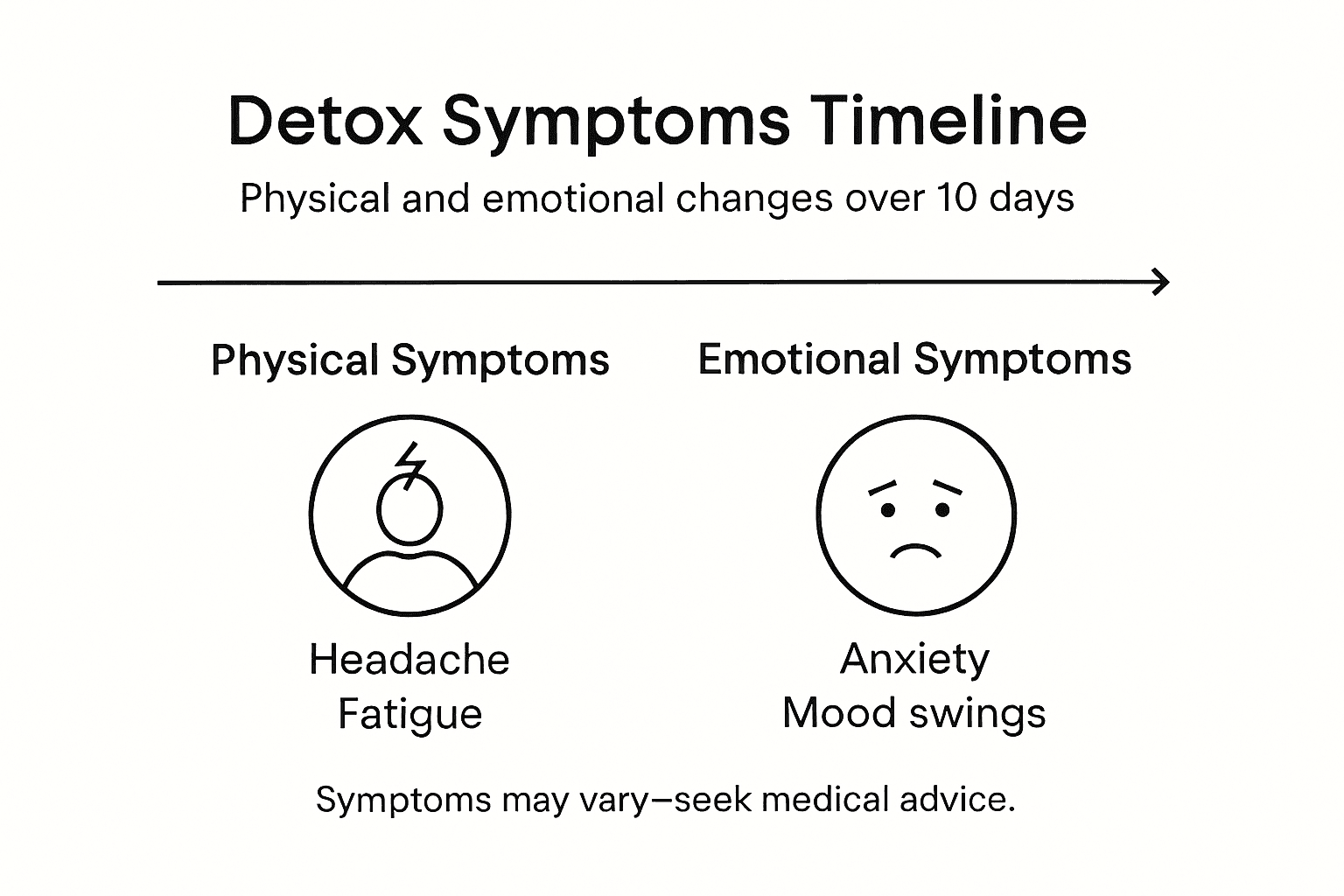
Your brain chemistry is recalibrating, your body is adjusting to absence, and your emotions reflect both biological changes and psychological stress.
This table summarizes common physical and emotional symptoms during detox and their typical impacts:
| Symptom Type | Examples | Typical Duration | Impact on Daily Life |
|---|---|---|---|
| Physical | Headaches, fatigue, muscle aches | Peaks days 2-3, then declines | Disrupted sleep, reduced energy |
| Emotional | Anxiety, mood swings, cravings | Intense first week, gradual improvement | Low mood, poor concentration |
Physical Symptoms You’ll Experience
Physical detox symptoms range from uncomfortable to intense, depending on the substance and your individual health. These aren’t signs something is wrong—they’re signs your body is working to rebalance itself.
Common physical symptoms include:
- Headaches – Often severe, sometimes lasting days
- Fatigue and low energy – Your body prioritizes healing over everyday function
- Muscle aches – Generalized body pain and tension
- Sleep disturbances – Insomnia, vivid nightmares, or fragmented rest
- Digestive changes – Nausea, constipation, or diarrhea
- Skin changes – Sweating, breakouts, or increased sensitivity
- Tremors – Involuntary shaking or muscle twitches in some cases
These symptoms peak during days 2-3 and gradually decline. Common detox symptoms and their management require proper hydration, nutrition, and rest to minimize suffering.
Emotional Symptoms Can Feel Overwhelming
The emotional experience often surpasses physical discomfort in intensity. Your brain is literally rewiring its chemistry, which creates profound psychological effects that demand attention and support.
Emotional symptoms typically include:
- Mood swings – Rapidly shifting from one emotion to another
- Irritability – Everything feels annoying or frustrating
- Anxiety – Worry, panic, or sense of dread without clear cause
- Depression – Sadness, hopelessness, or emotional numbness
- Intense cravings – Both physical and psychological urges for the substance
- Difficulty concentrating – Scattered thinking and poor focus
These emotional challenges demand supportive care because they can trigger relapse. The psychological distress is real and valid, not weakness.
Why Both Occur Simultaneously
Physical and emotional sensations arise during detox because they’re interconnected. Your nervous system, endocrine system, and brain chemistry are all recalibrating together, creating cascading effects throughout your body.
A withdrawal symptom like tremors increases anxiety. Poor sleep worsens depression. Anxiety reduces appetite, weakening your body’s ability to heal. They reinforce each other, amplifying the overall experience.
Emotional challenges during detox demand supportive care—mood swings and psychological distress are common and expected, not signs of failure.
This is why medical supervision helps. Medications can reduce physical suffering while allowing your brain to stabilize. Counseling addresses emotional components before they escalate into crisis situations.
Pro tip: Schedule supportive activities for peak symptom days (days 2-3)—phone calls with trusted friends, therapy sessions, or structured activities reduce the psychological intensity of physical symptoms by keeping your mind partially occupied.
Risks, Mistakes, and Safe Supplement Support
Not all supplement support during detox is created equal. Many products marketed for detoxification contain hidden risks, lack scientific evidence, or make claims that sound good but don’t hold up under scrutiny.
Understanding what actually works versus what’s hype protects your health and your wallet.
Common Mistakes People Make
People pursuing detox often fall into predictable traps that undermine their progress or create new health problems.
The biggest mistakes include:
- Believing social media claims – Products advertised on social platforms often lack scientific support and safety testing
- Thinking supplements replace healthy habits – No pill substitutes for proper sleep, nutrition, and hydration
- Combining multiple supplements without research – Interactions between products can cause serious problems
- Ignoring ingredient transparency – Products with unlisted ingredients or vague formulations hide potential dangers
- Assuming “natural” means “safe” – Plant-based doesn’t automatically equal safe or effective
- Skipping medical consultation – Starting supplements without professional input invites complications
These mistakes often stem from desperation. People want rapid solutions and supplements market themselves as exactly that—quick fixes requiring minimal effort.
Real Risks of Unsupervised Supplement Use
Supplements carry legitimate health risks that deserve serious consideration. Many detox supplements lack scientific support and pose health risks, including adverse medication interactions, liver stress, and contamination from undeclared ingredients.
Specific risks include:
- Medication interactions – Supplements interfere with prescriptions, reducing effectiveness or creating toxicity
- Liver strain – Poorly formulated supplements add processing burden when your liver is already working hard
- Contamination – Unregulated manufacturing can introduce heavy metals or bacteria
- Misleading ingredient lists – Hidden or mislabeled ingredients create unpredictable effects
- Electrolyte imbalance – Some detox formulas cause dangerous mineral depletion
Regulatory oversight is less strict for supplements than medications, so consumers must seek trusted sources and consult health professionals before use.
Using Supplements Safely
Using dietary supplements wisely means approaching them with the same scrutiny you’d apply to medications. Not all supplements require abandonment—some genuinely support health when used correctly.
Safe supplement practices include:
- Consult your doctor first – Disclose all supplements you’re considering, especially if you take medications
- Research the actual evidence – Look for peer-reviewed studies, not marketing materials
- Start with one supplement – Add new products slowly to identify any reactions
- Buy from reputable manufacturers – Companies with third-party testing and transparent ingredient sourcing matter
- Track how you feel – Keep notes on any changes, positive or negative
- Avoid “miracle” claims – Products promising rapid weight loss or toxin elimination are marketing, not science
During detox, your body needs support through basic nutrition, hydration, and rest far more than through supplements. When supplementation is appropriate, pharmaceutical-grade quality with transparent sourcing provides your best safety margin.
Pro tip: Before purchasing any detox supplement, request the third-party testing certificate and speak with your doctor about potential interactions with any medications you take.
Support Your Body’s Detox Journey with Trusted, Science-Backed Solutions
Understanding what happens during detox means recognizing the intense physical and emotional challenges your body faces as it clears toxins and recalibrates. The article highlights how withdrawal symptoms peak and decline, emphasizing the need for safe, natural support during this delicate process. If you are experiencing fatigue, mood swings, or digestive changes, choosing pharmaceutical-grade supplements and evidence-based protocols can make a critical difference in your recovery.
Explore reliable detox and parasite cleanse products at MahoneyInter that are designed to complement your body’s natural detoxification. With offerings such as liver support complexes, NAC, and fenbendazole, you get holistic health solutions created for safety and purity. Don’t wait until withdrawal symptoms overwhelm you take control of your health today with carefully formulated supplements at MahoneyInter – Your Destination for Detox Support. Learn more about safe protocols and how to optimize your detox at Understanding Detoxification Explained and review Examples of Detox Protocols for a well-informed approach.
Start your journey with confidence and experience the difference that true quality and knowledge bring to your wellness regimen.
Frequently Asked Questions
What is the difference between medical detoxification and commercial detox products?
Medical detoxification is a clinically supervised process that treats specific poisonings or withdrawal symptoms, while commercial detox products are marketed for general health benefits and often lack scientific evidence.
What symptoms should I expect during the detox process?
During detox, you may experience a range of physical symptoms such as headaches, fatigue, muscle aches, and digestive changes, as well as emotional symptoms like mood swings, anxiety, and intense cravings.
How long does the detox process typically take?
The detox process can last anywhere from three to ten days, depending on the substance involved and individual health factors, with peak symptoms often occurring between days two and three.
Are detox supplements safe to use during the detox process?
Many detox supplements can carry risks and may not be scientifically backed. It’s important to consult a healthcare professional before using any supplements to avoid adverse effects and ensure safety.