
Magnesium Explained: Benefits, Types, Food Sources & How to Choose the Right Supplement
Magnesium is an essential mineral that supports hundreds of processes throughout the human body. From supporting normal muscle function to


Seeing something unusual in the toilet can be unsettling, especially when it looks like a worm, thread, or small white segment. Some parasites in stool can be visible to the naked eye, including certain adult intestinal worms and tapeworm segments. However, many intestinal parasites, their eggs, and single-celled organisms are microscopic and cannot be identified simply by looking at stool.
That means a normal-looking bowel movement does not necessarily rule out an intestinal parasite, while an unusual-looking one does not automatically confirm an infection. If you are concerned about something you have noticed, proper medical testing is more reliable than visual identification alone. Depending on the suspected parasite, testing may involve a stool examination or another targeted diagnostic method.
No single appearance applies to every parasite. What parasites look like in stool depends on the organism and whether it passes as an adult worm, larva, egg, or segment.
Things that may occasionally be noticed include:
Tapeworm infections are a useful example. Instead of seeing an entire tapeworm, a person may notice individual segments, called proglottids, passing in the stool. Passing proglottids is one of the more visible signs associated with intestinal tapeworm infection.
No. Many intestinal parasites cannot be seen in stool with the naked eye.
Parasite eggs are generally microscopic, and protozoan parasites may also require laboratory testing for detection. Different testing methods may be used depending on the suspected organism.
This is why appearance should be treated as a clue, not a diagnosis.
Different intestinal worms have different appearances and behaviors. Some may occasionally be visible, while others are more likely to be detected through laboratory testing.
Pinworms are thin, white worms that generally measure about 6 to 13 millimeters long. They are often noticed around the anal area rather than mixed into stool, and itching around the anus—particularly at night—is a common symptom.
When pinworm infection is suspected, a tape test is commonly used to collect eggs from the skin around the anus. It is typically performed in the morning before washing or using the bathroom.
Some roundworm infections can involve considerably larger worms than pinworms. In certain cases, an adult worm may be passed and noticed in stool.
However, seeing a worm-like object does not identify the species on its own. Laboratory evaluation and clinical context may still be necessary.
Tapeworm infections may produce visible segments rather than an entire worm. These segments can pass through the anus and appear in feces. Depending on the tapeworm type, proglottids may be passed individually or in short chains.
This is why searches for tapeworm segments or rice-like pieces in stool often relate to the same concern.
Not every intestinal worm is likely to be seen during a bathroom visit. Some adult worms remain attached inside the intestine, while eggs or larvae may be too small to identify without laboratory examination.
So, the absence of visible worms in human stool does not reliably exclude infection.
This is often more useful than simply asking, “Do I have worms?”
Many harmless or non-parasitic materials can produce shapes that resemble worms.
Mucus can appear stringy, slippery, clear, whitish, or yellowish. It may stretch or coil in a way that looks surprisingly similar to a thin worm.
Because mucus can occur for many digestive reasons, seeing string-like material alone does not confirm a parasitic infection.
The distinction between mucus vs worms in stool cannot always be made confidently from appearance alone.
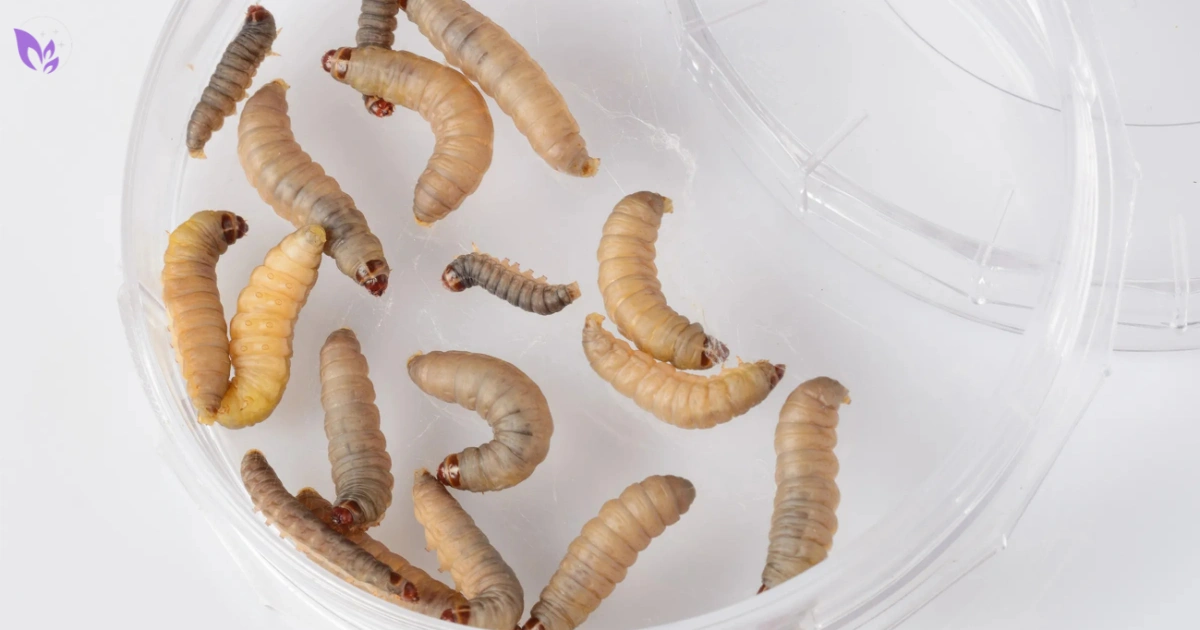
Plant fibers, vegetable strands, food skins, and other partially digested material can sometimes look like worms after passing through the digestive tract.
This is particularly important when evaluating things that look like worms in stool, because unusual shape or color does not necessarily mean the material is alive or parasitic.
Online photographs can be useful for general education, but they are not a reliable diagnostic method.
Lighting, toilet water, stool consistency, mucus, food particles, and camera quality can substantially change how an object appears. Proper testing is far more dependable than trying to match a photograph with pictures found online.
Tapeworm segments are called proglottids. In human intestinal tapeworm infection, passing these segments through the anus or in feces can be one of the most noticeable signs.
Depending on the species, segments may be flat, pale, or white, and may be passed alone or in chains. Some types of tapeworm proglottids can have a rice-grain-like appearance.
However, rice-like pieces in stool are not automatically proof of a tapeworm. Food particles and other material can sometimes look similar.
If tapeworm infection is suspected, laboratory examination is needed to establish the diagnosis and determine appropriate care.
Usually not. Parasite eggs in stool, also called ova, are generally microscopic. An ova and parasite examination checks a stool sample for intestinal parasites or their eggs under laboratory conditions.
For some suspected parasitic infections, stool testing may involve collecting more than one sample because parasite shedding is not always consistent.
This is why looking closely at stool at home cannot substitute for an ova and parasite stool test.
Visible worms are only one possible clue. Depending on the organism involved, intestinal parasitic infections may also be associated with symptoms such as:
Symptoms vary considerably by organism and infection severity. For a broader explanation beyond stool appearance, see this guide to intestinal parasite symptoms and treatment.
Some people also include cleanse-focused products from Mahoney Supplements in their broader digestive wellness routine.
An ova and parasite stool test, often shortened to an O&P examination, is a common laboratory method for detecting intestinal parasites and their eggs in stool.
However, it is not the only test available. Depending on the suspected organism, laboratory diagnosis may also involve antigen-detection tests, molecular methods, or other targeted procedures.
Parasites or their eggs may not be present in equal amounts in every bowel movement.
For that reason, examining specimens collected on different days can improve the likelihood of detection in certain situations. For suspected Taenia tapeworm infection, we recommend examining three stool samples collected on different days to improve the sensitivity of microscopic testing.
Laboratory identification may involve microscopy and, depending on the organism, additional specialized tests. For suspected tapeworm cases, testing and diagnosis may include examining stool samples or passed segments.

Consider seeking medical advice if you repeatedly notice something that appears to be a worm or segment, particularly when it occurs alongside other symptoms.
Reasons to seek evaluation may include:
You do not need to diagnose the cause yourself before seeking help. A healthcare professional can decide which test is appropriate based on your symptoms and possible exposures.
Mucus, undigested food, and other stool material can sometimes be mistaken for worms.
People concerned about Candida may also compare unusual stool changes with signs of parasites, but appearance alone cannot distinguish one cause from another. Symptoms can overlap across many digestive conditions, so visual self-diagnosis is unreliable.
For a focused comparison of these concerns, read the guide on Candida vs parasites.
Parasites in stool do not all look the same. Some intestinal worms or tapeworm segments may be visible, while many parasites, larvae, and eggs are too small to see without laboratory testing.
Mucus, vegetable fibers, and undigested food can also create surprisingly worm-like shapes. So what you see in the toilet can prompt an investigation, but it cannot confirm an infection.
If unusual material keeps appearing or is accompanied by persistent digestive symptoms, proper medical evaluation and appropriate testing are the safest ways to determine what is actually happening.
Visible parasites can vary in appearance. Some worms may look thin and white, others may be longer and rounded, while certain tapeworm infections may produce flat segments in stool. Many parasites and their eggs are microscopic and cannot be seen at home.
White worms in stool may appear thin or thread-like, depending on the type involved. Pinworms, for example, are small, thin, and white. However, mucus and undigested plant fibers can also look similar, so appearance alone cannot establish a diagnosis.
Yes. Mucus may be long, stringy, pale, and slippery, which can make it resemble a worm. Evaluate repeated mucus or accompanying digestive symptoms based on the full clinical picture rather than appearance alone.
Generally, no. Most parasite eggs in stool are microscopic and require laboratory testing to detect.
Small pale or white pieces resembling grains of rice can sometimes be tapeworm segments, depending on the species. However, undigested food and other stool material can look similar, so rice-like pieces should not automatically be assumed to be parasites.
Disclaimer: This content is for informational purposes only and should not replace professional medical advice, diagnosis, or treatment.


Noor-ul-Ain is a Tech & SEO Content Writer with over 4 years of experience creating search-optimized content for digital platforms. She specializes in SaaS products, AI tools, SEO strategy, and product documentation, helping platforms turn complex features into clear, search-driven growth. Noor-ul-Ain has also written extensively on health science, sports, fitness, fashion, and beauty, focusing on informative and reader-friendly content.
Magnesium is an essential mineral that supports hundreds of processes throughout the human body. From supporting normal muscle function to

An herbal extract is a concentrated preparation made by removing specific compounds from a plant using extraction methods such as

Have you ever started a normal meal, eaten only a few bites, and suddenly felt like you cannot continue? If