
Standardized Herbal Extracts Explained: Understanding 5%, 10:1 & 95%
An herbal extract is a concentrated preparation made by removing specific compounds from a plant using extraction methods such as


If you have had your gallbladder removed and started researching bile support, you have probably come across both TUDCA and ox bile. They are often discussed together, but they are not the same and don’t serve the same purpose.
Gallbladder removal does not stop the liver from producing bile. Instead, it changes how the body stores and delivers bile to the intestine. Without a gallbladder, bile is no longer stored and concentrated for release around meals; it flows more continuously into the digestive tract.
Questions around bile support, digestion, and supplement ingredients often overlap, so understanding the difference matters more than simply choosing one option over another.
When comparing TUDCA vs ox bile, the key point is that they fall into different categories and may serve different goals.
| Feature | TUDCA | Ox Bile |
| What it is | A specific hydrophilic bile acid | A bile-derived supplement |
| Main area of interest | Bile-acid, liver and biliary research | Digestive bile supplementation |
| Relationship to fat digestion | Different and less direct role | More directly associated with supplying bile components around meals |
| After gallbladder removal | Situation-dependent | Situation-dependent |
| Same thing? | No | No |
TUDCA, or tauroursodeoxycholic acid, is a specific bile acid that has been studied in hepatobiliary and gallstone-related settings. Ox bile, by comparison, is used as a source of bile-derived components and is commonly discussed in relation to digestion after meals.
Neither is automatically required after gallbladder removal.
The liver continues to make bile after cholecystectomy. The most noticeable change is the storage and release system.
Before surgery, the gallbladder stores and concentrates bile between meals and releases it when food—especially dietary fat—enters the small intestine. After removal, bile flows more continuously from the liver into the intestine instead of arriving as a concentrated release from the gallbladder.
Some people adjust without major digestive problems. Others may notice changes such as loose stools, urgency, or difficulty tolerating certain meals.
This does not automatically mean the body has a bile “deficiency.” The physiology is more complex, so understanding how bile flow affects digestion can help put post-surgery symptoms into context.
TUDCA is short for tauroursodeoxycholic acid. It is a naturally occurring hydrophilic bile acid formed through conjugation of ursodeoxycholic acid with taurine. Researchers have studied TUDCA in several liver and biliary contexts.
That makes TUDCA different from a broad bile supplement. It should not simply be described as a replacement for the concentrated bile that was previously released by the gallbladder.
For example, clinical research on TUDCA has examined the compound in people with gallstone disease and evaluated changes in bile composition and biochemical markers. That is useful evidence about TUDCA, but it is not a direct study showing that TUDCA is superior to ox bile after gallbladder removal.
This distinction matters when comparing ox bile vs. TUDCA.
Mahoney supplements support everyday wellness, with formulas focused on areas such as liver health, digestion, and nutritional balance. TNM Liver Support, for example, includes TUDCA as part of its broader liver-support formula.
Ox bile is a bile-derived supplement often discussed as a way to add bile components to the digestive process.
That is why ox bile after gallbladder removal often comes up in searches about fatty meals and digestive support. Bile acids normally help with the digestion and absorption of dietary fats, so the rationale behind ox bile is more directly connected with meal-time digestion than the rationale behind TUDCA.
However, gallbladder removal does not mean everyone needs bile salts afterward. Some people experience few or no digestive changes after surgery.
The relevant question is therefore not simply, “Do I have a gallbladder?” but rather, “What problem am I actually trying to address?”

Instead of asking which is better, TUDCA or ox bile in every situation, it is more useful to compare them according to the reason someone is considering supplementation.
| Goal or Situation | More Relevant Discussion |
| Comparing a specific bile acid with broader bile supplementation | TUDCA vs ox bile |
| Difficulty tolerating fatty meals | Ox bile is more directly related to digestive bile supplementation |
| Interest in liver or bile-acid research | TUDCA is more directly relevant |
| No digestive symptoms after gallbladder removal | Neither may automatically be necessary |
| Persistent watery or urgent diarrhea | Medical evaluation is more appropriate than assuming more bile is needed |
There is no universal winner in the TUDCA or ox bile comparison.
For someone mainly researching fat digestion after gallbladder removal, ox bile is the more directly relevant topic. For someone researching specific hydrophilic bile acids, bile flow, or hepatobiliary science, TUDCA is more relevant.
The reason for taking either one matters more than simply choosing whichever supplement sounds stronger.
One of the most important distinctions after gallbladder surgery is the difference between difficulty tolerating fatty meals and bile acid diarrhea after gallbladder removal. They are not necessarily the same problem.
Some people may experience bloating, discomfort, or stool changes around richer meals. In other cases, excessive bile acids reaching the colon can contribute to watery stools, urgency, and increased bowel frequency. Medical literature recognizes diarrhea after gallbladder removal as a recognized post-cholecystectomy concern, with bile acid diarrhea being one possible underlying cause.
A systematic review involving 3,476 patients reported post-cholecystectomy diarrhea in 13.3% overall, although rates varied across individual studies. The authors recommended evaluating suspected cases for bile acid diarrhea rather than assuming every digestive symptom has the same cause.
This matters when considering ox bile. If persistent watery diarrhea is related to excessive bile acids reaching the colon, automatically assuming that “more bile” is the answer may misunderstand the underlying problem.
Can you take TUDCA and ox bile together? This is another common question because the two supplements are often discussed as if they complement each other.
They are different substances, so using one does not automatically duplicate the other. However, strong direct clinical evidence does not show that people should routinely combine TUDCA and ox bile after gallbladder removal.
There is also no clear head-to-head clinical evidence showing that taking both is universally better than using one—or neither—based on an individual’s actual medical situation.
For that reason, whether TUDCA and ox bile together make sense should depend on the reason for supplementation, symptoms, medications, and relevant health conditions, not a blanket rule.
People without a gallbladder may encounter TUDCA in discussions about bile acids and liver or biliary support, but that is a different question from whether ox bile may be relevant around meals.
Because this topic already has its own search intent, our detailed guide to taking TUDCA without a gallbladder explains that issue separately.
This distinction also prevents the TUDCA vs ox bile after gallbladder removal comparison from becoming another general TUDCA guide.

Both bile-acid-related supplements and bile-derived supplements can cause digestive changes in some people. Persistent diarrhea, worsening abdominal symptoms, or major changes in bowel habits after gallbladder removal deserve proper assessment rather than repeated self-adjustment of supplements.
Cholecystectomy is recognized as a risk factor when clinicians evaluate chronic non-bloody diarrhea for possible bile acid diarrhea.
This is particularly relevant when diarrhea is watery, urgent, frequent, or persistent.
Anyone taking prescription medications, managing liver or digestive disease, or experiencing ongoing symptoms should discuss supplement use with an appropriate healthcare professional. A fixed TUDCA or ox bile dosage cannot be recommended universally based only on gallbladder status.
TUDCA is a specific bile acid, and research focuses largely on hepatobiliary and bile-acid-related biology. Ox bile is a broader bile-derived supplement whose rationale is more directly connected with supplying bile components for digestion.
Neither option is automatically necessary after cholecystectomy, and there is not enough direct comparative clinical evidence to declare one universally better.
If the main concern is poor tolerance of fatty meals, the ox bile discussion is more directly relevant. If the interest is TUDCA’s specific role as a bile acid, that is a different question. Persistent watery diarrhea deserves particular attention because additional bile supplementation may not address the underlying issue.
No. TUDCA is a specific hydrophilic bile acid, while ox bile is a broader bile-derived supplement. They are therefore not interchangeable.
Neither is universally better. Ox bile is more directly associated with digestive bile supplementation around meals, while TUDCA is more closely associated with bile-acid and hepatobiliary research.
Not automatically. Many people continue to produce and deliver bile after surgery without needing supplementation. Consider persistent digestive symptoms individually rather than assuming ox bile is always required.
Some people use both, but there is no strong evidence that everyone needs the combination after gallbladder removal. Individual symptoms, medications, and medical history should guide the decision.
Disclaimer: This article is for informational purposes only and is not a substitute for professional medical advice, diagnosis, or treatment.


Noor-ul-Ain is a Tech & SEO Content Writer with over 4 years of experience creating search-optimized content for digital platforms. She specializes in SaaS products, AI tools, SEO strategy, and product documentation, helping platforms turn complex features into clear, search-driven growth. Noor-ul-Ain has also written extensively on health science, sports, fitness, fashion, and beauty, focusing on informative and reader-friendly content.
An herbal extract is a concentrated preparation made by removing specific compounds from a plant using extraction methods such as

Have you ever started a normal meal, eaten only a few bites, and suddenly felt like you cannot continue? If
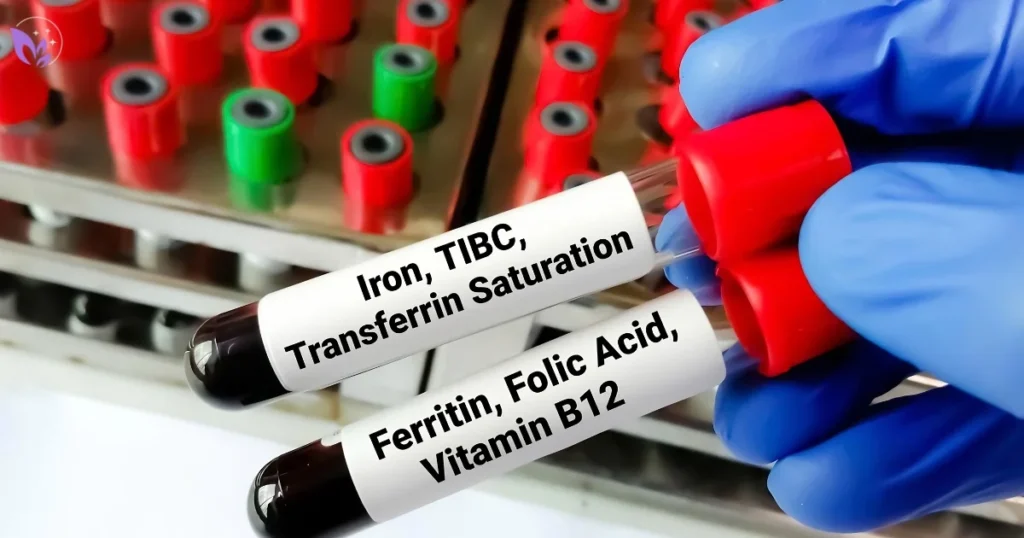
You open your lab report and notice three iron-related results: ferritin, serum iron, and TIBC. Each has its own number,