

Most people would be surprised to learn that up to one billion people worldwide are affected by parasitic infections, with American communities not immune to these hidden threats. Even those devoted to holistic wellness may overlook how parasites can quietly weaken the immune system or disrupt long-term health. This guide unpacks the real science behind common parasite myths and provides health-conscious individuals with much-needed clarity on natural detox strategies that support immune strength and cancer prevention.
Table of Contents
- Defining Parasites And Common Misconceptions
- Major Types Of Human Parasites Explained
- Health Impacts And Symptoms Of Parasitic Infections
- Parasite Transmission And Risk Factors
- Risks, Benefits, And Effectiveness Of Parasite Cleanses
Key Takeaways
| Point | Details |
|---|---|
| Understanding Parasites | Parasites are diverse organisms classified into protozoa, helminths, and ectoparasites, each with distinct biological roles and transmission mechanisms. |
| Health Impacts of Infections | Parasitic infections can cause a wide range of symptoms, from gastrointestinal issues to systemic complications, requiring accurate diagnosis and treatment. |
| Transmission Risk Factors | Risks of parasitic transmission include contaminated food and water, animal contact, and insect vectors, emphasizing the importance of hygiene and preventive measures. |
| Caution with Cleanses | Unverified parasite cleanses present risks including nutrient deficiencies, and professional medical evaluation is recommended for accurate diagnosis and treatment. |
Defining Parasites and Common Misconceptions
Parasites represent complex biological organisms that inhabit living hosts, deriving nutrients and survival advantages through intricate survival mechanisms. Understanding these organisms requires moving beyond simplistic stereotypes to recognize their nuanced biological roles. Parasitic relationships span a complex spectrum of interactions that challenge conventional perceptions.
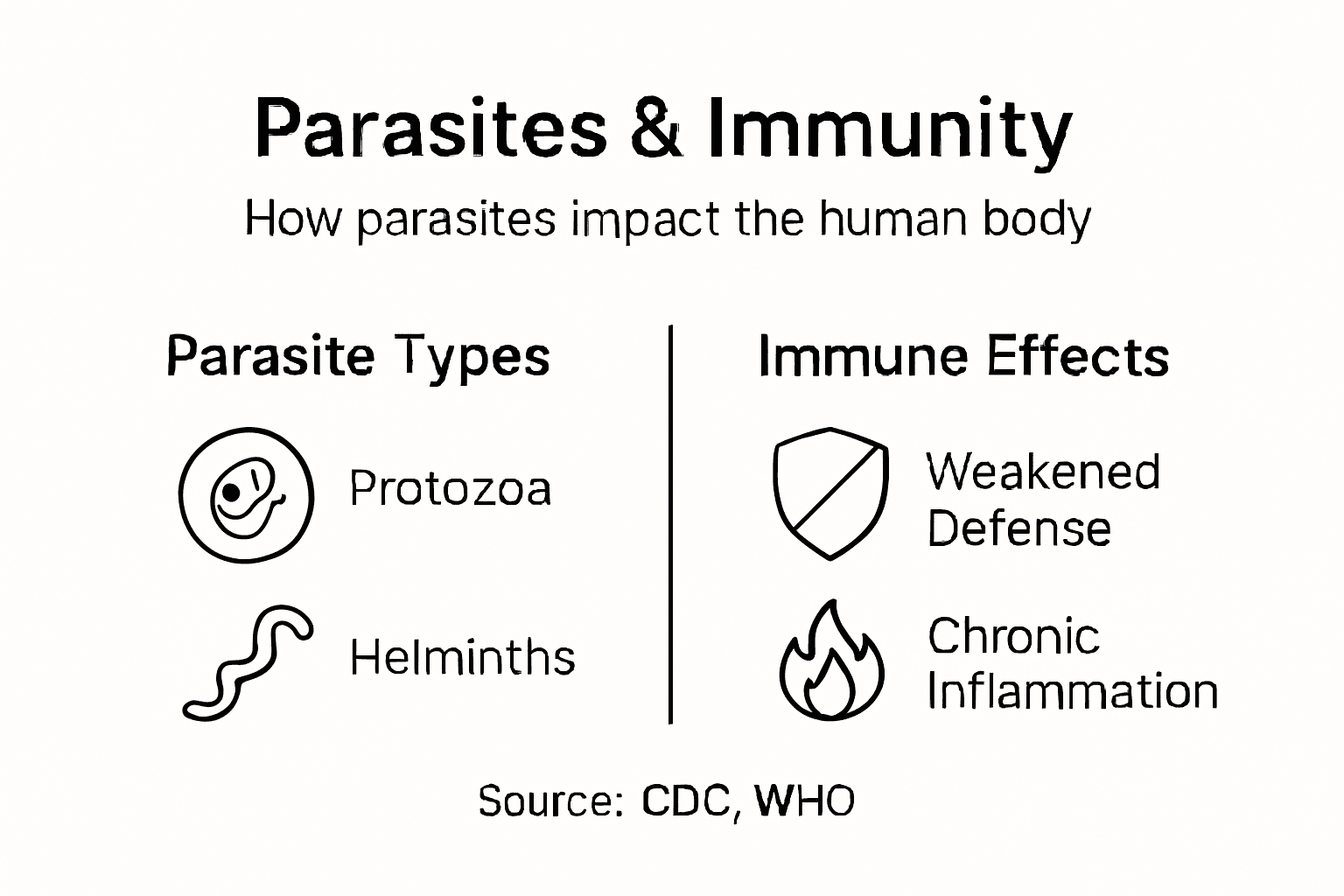
These organisms can be categorized into three primary groups: protozoa, helminths, and ectoparasites. Protozoa are microscopic single-celled organisms capable of rapid multiplication within human hosts, potentially causing severe infections. Helminths represent larger multicellular organisms like roundworms and tapeworms that cannot reproduce inside human bodies but can still generate significant health complications during their larval stages. Ectoparasites such as ticks, lice, and mites survive by living externally on host surfaces, extracting nutrients through direct contact.
Parasitic transmission mechanisms are remarkably diverse, including direct contact, contaminated water and food sources, insect vectors, and environmental exposure. Contrary to popular belief, parasites do not always cause immediately detectable symptoms. Many can inhabit human bodies for extended periods, subtly compromising immune function and metabolic processes before manifesting noticeable health effects.
Pro tip: Regular comprehensive stool testing and maintaining robust hygiene practices can help detect and prevent potential parasite infections before they become serious health concerns.
Major Types of Human Parasites Explained
The human body can host a remarkable variety of parasitic organisms, each with unique characteristics and potential health implications. Diverse parasite classifications reveal complex biological interactions that challenge our understanding of microbial life. These organisms are scientifically categorized into three primary groups: protozoa, helminths, and ectoparasites, each representing distinct survival strategies and transmission mechanisms.
Protozoa represent microscopic single-celled organisms capable of remarkable adaptability. These parasites can be further subdivided based on their locomotion methods, including amoebae, flagellates, ciliates, and sporozoans. They demonstrate extraordinary ability to multiply rapidly within human tissues, potentially infecting critical systems like the intestines and bloodstream. Some protozoan parasites like Giardia and Plasmodium can cause severe diseases such as giardiasis and malaria, demonstrating their significant impact on human health.
Helminths, alternatively known as parasitic worms, comprise another critical category of human parasites. These multicellular organisms typically inhabit gastrointestinal tracts or blood vessels, with notable examples including roundworms, tapeworms, and flukes. Unlike protozoa, helminths generally cannot reproduce inside human hosts but can still generate substantial health complications through their larval stages. Their complex life cycles often involve multiple host organisms and intricate transmission pathways that challenge conventional medical interventions.

Ectoparasites represent external organisms living on human skin surfaces, including blood-sucking arthropods like ticks, lice, fleas, and mites. These organisms not only extract nutrients directly from host surfaces but can also serve as critical disease vectors, transmitting serious infections between hosts. Their ability to burrow into skin and survive extended periods makes them particularly challenging biological entities.
Pro tip: Implement regular comprehensive medical screenings and maintain rigorous personal hygiene practices to minimize potential parasite transmission risks and detect early signs of infection.
Here’s a summary of the main categories of human parasites and their distinguishing features:
| Parasite Type | Size & Structure | Typical Location in Host | Notable Example |
|---|---|---|---|
| Protozoa | Microscopic, single-celled | Intestine, bloodstream | Giardia |
| Helminths | Large, multicellular worms | GI tract, blood vessels | Tapeworm |
| Ectoparasites | Visible, external arthropods | Surface of skin, hair | Tick |
Health Impacts and Symptoms of Parasitic Infections
Parasitic diseases create complex health challenges that manifest through a diverse range of symptoms affecting multiple body systems. These infections can trigger profound physiological disruptions, impacting everything from digestive function to neurological processes. The severity and presentation of symptoms depend critically on the specific type of parasite, the infected individual’s immune status, and the duration of the infection.
Gastrointestinal symptoms represent the most common clinical manifestation of parasitic infections. Individuals may experience persistent diarrhea, abdominal cramping, unexpected weight loss, and nutritional malabsorption. Protozoan parasites like Giardia can cause intense intestinal inflammation, while helminth infections frequently generate chronic digestive disturbances that compromise overall metabolic functioning. Some parasites strategically interfere with nutrient absorption, potentially leading to long-term nutritional deficiencies and compromised immune response.
Beyond digestive disruptions, parasitic infections can generate systemic symptoms that challenge traditional diagnostic approaches. Patients might experience unexplained fatigue, muscle aches, intermittent fever, skin rashes, and neurological complications. Certain parasites possess extraordinary abilities to migrate through bodily tissues, potentially causing inflammation in unexpected regions. Blood-borne parasites like Plasmodium can trigger severe immune responses, generating complex metabolic challenges that extend far beyond localized infection sites.
Diagnosing parasitic infections requires comprehensive medical evaluation, as symptoms frequently mimic other health conditions. Advanced diagnostic techniques including stool analysis, blood tests, and specialized imaging can help identify specific parasitic agents. Understanding the nuanced ways parasites interact with human physiological systems is crucial for developing targeted treatment strategies that address both immediate symptoms and underlying infection mechanisms.
Pro tip: Maintain rigorous personal hygiene, consume thoroughly cooked foods, and drink only treated water to minimize potential parasite transmission risks.
Parasite Transmission and Risk Factors
Parasite transmission mechanisms represent a complex network of biological interactions that span multiple environmental and social contexts. Parasites exploit diverse pathways to spread between hosts, including contaminated food and water sources, direct animal contact, insect vectors, and human-to-human interactions. Understanding these transmission routes is crucial for developing effective prevention strategies that protect individual and community health.
Zoonotic transmission emerges as a particularly significant risk factor, with domestic and wild animals serving as critical reservoirs for parasitic agents. Pets, livestock, and wildlife can unknowingly harbor parasites that potentially jump species barriers, creating unexpected infection pathways. Common transmission scenarios include walking barefoot in contaminated soil, consuming undercooked meats, drinking untreated water, and experiencing close contact with animals that carry microscopic parasitic organisms.
Human behavioral and environmental factors dramatically influence parasitic infection risks. Populations living in regions with poor sanitation infrastructure, limited access to clean water, and inadequate healthcare face substantially higher transmission probabilities. Specific high-risk behaviors include consuming unwashed produce, walking barefoot in contaminated areas, neglecting personal hygiene practices, and living in crowded or unsanitary conditions. Certain life stages of parasites are uniquely infectious, making precise understanding of transmission dynamics essential for effective prevention.
Bloodborne and vector-transmitted parasites represent another critical transmission pathway. Mosquitoes, ticks, and other blood-feeding insects can rapidly spread parasitic agents across geographic regions. Transfusion-related transmission and needle-sharing practices further complicate the epidemiological landscape of parasitic infections. Travelers, healthcare workers, and individuals with compromised immune systems face elevated risks requiring targeted preventive interventions.
Pro tip: Implement comprehensive hygiene protocols, cook foods thoroughly, drink treated water, and maintain regular medical screenings to minimize parasite transmission risks.
This table compares common modes of parasite transmission and associated risk scenarios:
| Transmission Route | How It Occurs | At-Risk Groups |
|---|---|---|
| Contaminated food/water | Eating/drinking infected items | Rural populations |
| Animal contact | Pets, livestock, wildlife | Farmers, pet owners |
| Insect vectors | Bites from mosquitoes/ticks | Travelers, outdoor workers |
| Human-to-human | Close physical contact | Crowded living spaces |
Risks, Benefits, and Effectiveness of Parasite Cleanses
Parasite cleanse protocols raise significant medical concerns regarding their scientific validity and potential health implications. While marketed aggressively through wellness platforms and social media channels, these alternative treatments lack robust clinical evidence supporting their effectiveness. Most parasite cleanses combine herbal supplements, dietary modifications, and detoxification strategies that promise comprehensive intestinal parasite elimination without substantive medical validation.
The primary risks associated with unverified parasite cleanses include potential nutrient deficiencies, gastrointestinal disruption, and delayed professional medical intervention. Individuals attempting self-diagnosis and treatment may overlook critical underlying health conditions that require targeted medical assessment. Parasitic symptoms frequently mimic other complex medical conditions, making accurate professional diagnosis essential. Herbal supplements and unregulated cleanse protocols can potentially interact negatively with existing medications, creating additional health complications.
Medical professionals universally recommend comprehensive diagnostic testing over self-directed cleanse protocols. Legitimate parasitic infections demand precise identification of specific parasitic agents, followed by targeted prescription treatments. Accurate diagnosis involves specialized laboratory tests, including stool analysis, blood screenings, and potential imaging studies. These clinical approaches enable healthcare providers to develop personalized treatment strategies addressing the specific parasitic infection and individual patient health profile.
Despite limited scientific support, some alternative health practitioners argue that certain herbal compounds might demonstrate mild antimicrobial properties. However, these claims require extensive, peer-reviewed research to establish credible therapeutic value. Individuals concerned about potential parasitic infections should prioritize professional medical consultation, comprehensive health screenings, and evidence-based treatment approaches over unverified cleanse methodologies.
Pro tip: Consult healthcare professionals for accurate parasite testing and rely on scientifically validated medical treatments rather than unregulated cleanse protocols.
Protect Your Health by Targeting Parasites and Strengthening Immunity
Parasites quietly undermine your health and immune system in complex ways highlighted in this article. If you struggle with unexplained fatigue, digestive issues, or worry about hidden parasitic infections affecting your wellbeing, taking proactive steps is crucial. Scientific insights reveal parasites interfere with nutrient absorption and immune function making it harder for your body to defend itself naturally.
Empower yourself with effective, holistic support from Mahoney Inter. Our pharmaceutical-grade supplements including ivermectin, fenbendazole, and liver support complexes are formulated to assist in parasite elimination and boost your immune resilience safely and naturally.

Don’t wait until symptoms worsen or complications arise. Visit Mahoney Inter now to explore trusted parasite cleanse protocols and immune support formulas. Start your health recovery journey today with products crafted for purity, potency, and your complete wellness. Discover how targeted supplements can make a real difference at Mahoney Inter.
Frequently Asked Questions
What are the main types of parasites that can affect human health?
Parasites can be categorized into three primary groups: protozoa (microscopic single-celled organisms), helminths (multicellular worms), and ectoparasites (external organisms like ticks and lice). Each group has distinct characteristics and health implications.
How do parasites impact the immune system?
Parasites can compromise immune function by evading detection and interfering with immune responses. Some can cause chronic inflammation, leading to weakened immunity and increased susceptibility to other infections.
What symptoms might indicate a parasitic infection?
Common symptoms of parasitic infections include gastrointestinal issues like diarrhea and abdominal pain, as well as systemic symptoms like fatigue, muscle aches, and skin rashes. The severity and presentation depend on the type of parasite and individual health factors.
Why are parasite cleanses not generally recommended?
Most parasite cleanses lack robust scientific evidence supporting their effectiveness and may pose health risks, such as nutrient deficiencies or gastrointestinal disturbances. Accurate diagnosis and treatment by healthcare professionals are recommended for dealing with parasitic infections.
Recommended
- Understanding Why Remove Parasites for Better Health – Mahoney inter
- Knowledge – Mahoney inter
- Parasites and Energy Levels: Impact on Wellness – Mahoney inter
- Parasite Cycle Explained: Impacts on Holistic Health – Mahoney inter
- The Link Between Oral and Overall Health: Why a Healthy Mouth Matters
- Understanding Hair Health: The Science Behind It | MyHair
- Wie entsteht Sonnenallergie? Ein umfassendes Verständnis – Kühlkern UG (Haftungsbeschränkt)