

More than 25 million American adults seek ways to improve liver health and enhance immunity every year. For those exploring natural detox solutions, understanding the real science behind supplements like NAC is crucial. This article goes beyond common myths, highlighting how NAC supports the body’s detoxification pathways—not as a direct toxin remover, but as a sophisticated aid for cellular resilience and antioxidant protection.
Table of Contents
- NAC in Detox: Core Definition and Myths
- How NAC Supports Liver Detox Pathways
- Glutathione Boosting and Cellular Protection
- Safe Usage, Dosage, and Interactions
- Comparing NAC to Other Detox Supplements
Key Takeaways
| Point | Details |
|---|---|
| NAC Supports Detoxification | N-Acetylcysteine enhances the body’s detoxification processes by increasing glutathione levels, aiding in toxin management without directly binding toxins. |
| Liver Health Enhancement | NAC plays a crucial role in supporting liver detox pathways and protecting liver cells from oxidative stress, promoting overall liver health. |
| Cellular Antioxidant Protection | As a precursor to cysteine, NAC boosts glutathione production, which is essential for defending against oxidative damage and facilitating DNA repair. |
| Consult Healthcare Professionals | It’s important to consult with healthcare providers to determine the appropriate dosage for NAC and assess any potential interactions with medications. |
NAC in Detox: Core Definition and Myths
N-acetylcysteine (NAC) is a powerful amino acid derivative that plays a crucial role in supporting the body’s natural detoxification processes. Unlike popular misconceptions, NAC is not a direct toxin binder but a sophisticated biochemical support mechanism that enhances the body’s inherent defense systems. Biochemical research reveals that NAC functions as a precursor to glutathione, the body’s master antioxidant, which helps neutralize harmful compounds and protect cellular health.
Many people misunderstand NAC’s detoxification role, believing it acts like a physical toxin remover. However, its true power lies in supporting the liver and kidney’s natural detoxification pathways. Scientific understanding of detoxification demonstrates that NAC primarily works by replenishing glutathione levels, which helps the body more effectively manage oxidative stress and neutralize potentially harmful substances.
The core mechanism of NAC involves boosting the body’s antioxidant defenses. By increasing glutathione production, NAC helps cells combat free radicals, supports mitochondrial function, and enhances the body’s ability to process and eliminate toxins. This indirect approach makes NAC a sophisticated nutritional strategy for supporting overall cellular health and resilience against environmental stressors.
Pro Tip: Consult with a healthcare professional to determine the appropriate NAC dosage for your specific health needs, as individual requirements can vary based on age, health status, and specific detoxification goals.
How NAC Supports Liver Detox Pathways
The liver serves as the body’s primary detoxification center, and N-acetylcysteine (NAC) plays a critical role in supporting these complex metabolic processes. Comprehensive liver detox research reveals that NAC functions as a powerful biochemical assistant, primarily by serving as a precursor to glutathione, the liver’s most essential antioxidant. By bolstering glutathione production, NAC helps the liver effectively neutralize and eliminate harmful toxins, protecting cellular structures from oxidative damage.
NAC’s support of liver detoxification occurs primarily through two key mechanisms. First, it enhances Phase II detoxification pathways, where toxins are transformed into water-soluble compounds for efficient elimination. Scientific insights into detoxification demonstrate that NAC helps conjugate potentially harmful substances, reducing their reactivity and facilitating their safe removal from the body. This process is crucial for maintaining optimal liver function and preventing cellular stress.
Moreover, NAC provides comprehensive hepatoprotective benefits beyond simple detoxification. It helps regulate inflammatory responses, supports mitochondrial energy production in liver cells, and promotes the regeneration of damaged hepatic tissue. By protecting liver cells from oxidative stress and enhancing their natural repair mechanisms, NAC contributes to long-term liver health and resilience against environmental and metabolic challenges.
Here’s a summary of how NAC supports key liver detox functions:
| Detox Pathway | NAC’s Role | Key Benefits |
|---|---|---|
| Phase II Conjugation | Supplies cysteine for glutathione | Enhances toxin elimination |
| Oxidative Stress Defense | Boosts antioxidant activity | Protects liver cells |
| Inflammation Modulation | Regulates immune response | Reduces cellular damage |
| Tissue Repair | Promotes regeneration | Supports long-term liver health |
Pro Tip: Consider consulting a healthcare professional about incorporating NAC supplements into your wellness routine, as individual dosage requirements can vary based on specific health goals and existing liver function.
Glutathione Boosting and Cellular Protection
Glutathione represents the body’s master antioxidant, playing a critical role in cellular defense and overall health maintenance. Cutting-edge cellular research reveals that NAC serves as a direct precursor to cysteine, the essential amino acid responsible for glutathione synthesis. By providing the key building blocks for this powerful antioxidant, NAC helps activate cellular defense mechanisms, specifically through pathways like NRF2, which trigger the production of protective enzymes that shield cells from oxidative damage.
The process of glutathione production is intricate and fundamental to cellular health. NAC works by supplying the critical amino acid cysteine, which acts as a rate-limiting component in glutathione synthesis. Anti-aging scientific insights demonstrate that enhanced glutathione levels help maintain optimal redox balance within cells, effectively preventing cellular damage and supporting comprehensive detoxification processes. This mechanism becomes increasingly important as we age, when oxidative stress can accelerate cellular deterioration.
Beyond simple antioxidant protection, NAC-driven glutathione production offers multifaceted cellular benefits. It supports mitochondrial function, aids in DNA repair, and helps neutralize harmful reactive oxygen species that can contribute to chronic disease and accelerated aging. By boosting the body’s natural antioxidant defenses, NAC provides a sophisticated approach to cellular protection that goes far beyond traditional supplement strategies.
Pro Tip: Consider timing your NAC supplement intake with meals to optimize absorption and minimize potential gastrointestinal discomfort.
Safe Usage, Dosage, and Interactions
NAC supplementation requires careful consideration and professional guidance to ensure optimal safety and effectiveness. Clinical research on NAC indicates that while generally well-tolerated, the supplement demands thoughtful administration. Typical daily dosages range from 600 mg to 1800 mg, with variations depending on specific health objectives and individual metabolic factors. Individuals with pre-existing conditions such as asthma, gastrointestinal ulceration, or compromised liver and kidney function should exercise additional caution and seek comprehensive medical consultation before beginning supplementation.
Medication interactions represent a critical consideration for NAC users. Certain pharmaceutical compounds may experience significant interactions, particularly nitroglycerin and some chemotherapy agents. Supplement usage guidelines recommend comprehensive medication reviews with healthcare professionals to identify potential contraindications. Patients taking multiple medications or managing complex health conditions should prioritize professional medical advice to develop a safe and personalized supplementation strategy.
Beyond pharmaceutical interactions, NAC’s absorption and effectiveness can be influenced by multiple factors. Timing of intake, concurrent nutrient consumption, and individual metabolic variations can impact the supplement’s bioavailability. Some individuals might experience mild gastrointestinal side effects, which can often be mitigated by adjusting dosage, taking supplements with food, or modifying administration timing. Monitoring body response and maintaining open communication with healthcare providers ensures a safe and beneficial supplementation experience.
Pro Tip: Keep a detailed log of your NAC supplement intake, including dosage, timing, and any observed effects, to help your healthcare provider make informed recommendations.
Comparing NAC to Other Detox Supplements
Detox supplements vary widely in their mechanisms and effectiveness, but N-acetylcysteine stands out as a uniquely powerful biochemical support agent. Comparative supplement research reveals NAC’s distinct advantage in directly supporting glutathione production, setting it apart from other common detox supplements like milk thistle, alpha-lipoic acid, and chlorella. While milk thistle primarily supports liver cell regeneration and alpha-lipoic acid helps regenerate antioxidants, NAC plays a critical role in actively replenishing the body’s master antioxidant system.
Detoxification pathway analysis demonstrates that NAC operates fundamentally differently from physical toxin binders like activated charcoal or chlorella. Instead of simply adsorbing toxins, NAC works at a cellular biochemical level, enhancing the body’s intrinsic detoxification processes. Its multi-dimensional approach includes neutralizing reactive oxygen species, facilitating toxin conjugation, and providing anti-inflammatory and mucolytic effects that extend far beyond traditional detox supplement capabilities.
The spectrum of detox supplements includes various approaches, but NAC’s biochemical sophistication makes it particularly noteworthy. Its ability to cross cellular membranes and directly support glutathione synthesis means it can protect and regenerate cells more comprehensively than many alternative supplements. This makes NAC especially valuable for individuals seeking a nuanced, scientifically-supported approach to cellular detoxification and protection, rather than a one-dimensional toxin removal strategy.
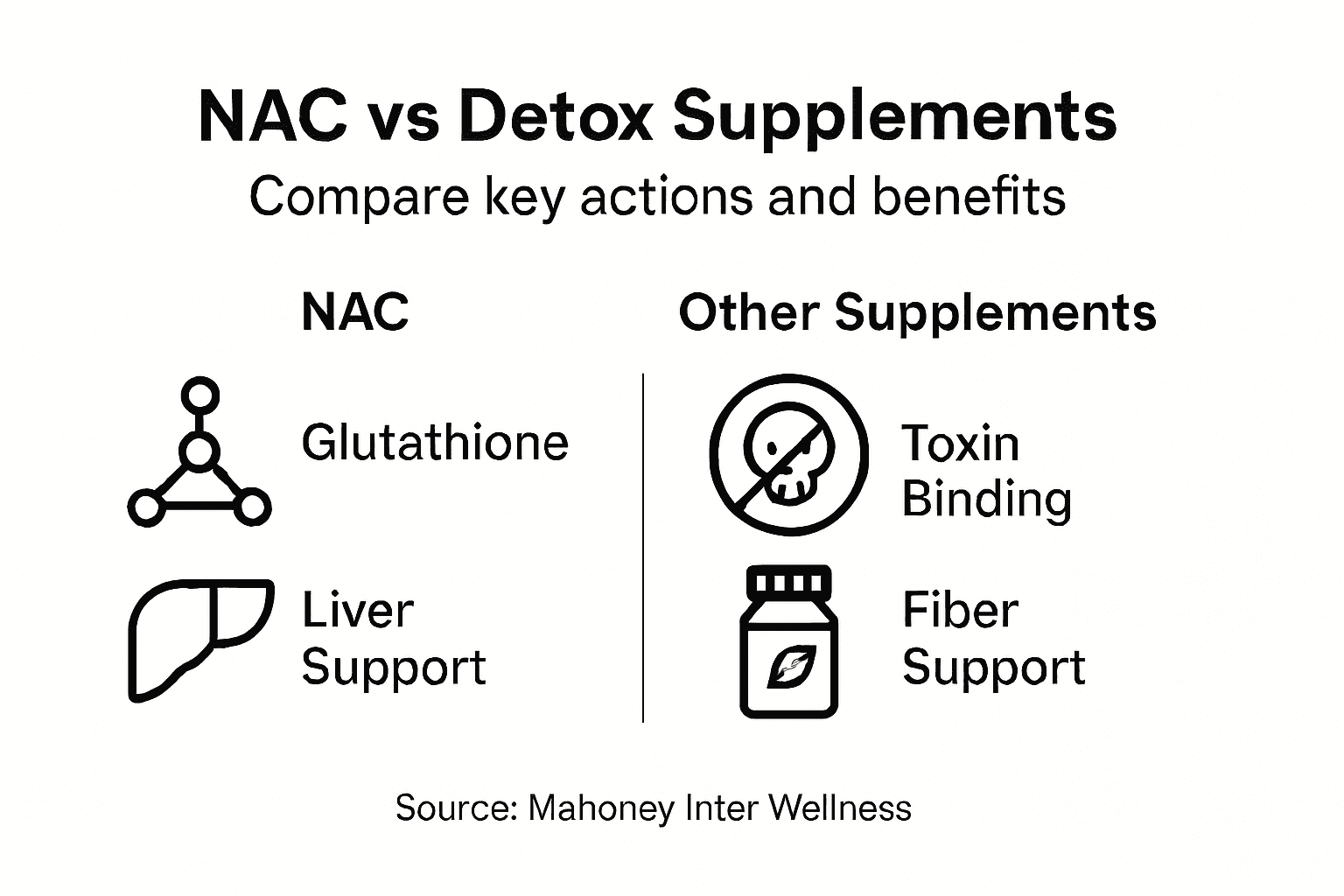
This comparison highlights how NAC differs from other common detox supplements:
| Supplement | Primary Action | Unique Benefit | Limitation |
|---|---|---|---|
| NAC | Boosts glutathione production | Cellular antioxidant protection | Not a direct toxin binder |
| Milk Thistle | Supports liver cell regeneration | Mild anti-inflammatory effect | Limited glutathione impact |
| Alpha-Lipoic Acid | Regenerates antioxidants | Broad antioxidant reach | Less direct liver support |
| Activated Charcoal | Binds toxins in gut | Fast physical removal | No cellular defense effect |
Pro Tip: Consider consulting a healthcare professional about combining NAC with other targeted supplements to create a personalized, comprehensive detox support strategy.
Unlock the Power of NAC for Advanced Detox and Liver Support
Understanding the critical role of N-acetylcysteine (NAC) in boosting glutathione production and enhancing liver detox pathways is just the first step toward better health. If you are struggling with managing oxidative stress or seeking to support your body’s natural defenses against environmental toxins, it is vital to choose supplements that deliver pharmaceutical-grade purity and proven efficacy. Many people face challenges like sluggish liver function, persistent cellular stress, or reduced antioxidant capacity — all of which NAC helps address by supporting key detoxification mechanisms and cellular repair.

Take control of your wellness journey with high-quality NAC supplements available at Mahoney Inter. Explore our curated selection that complements NAC’s benefits, including liver support complexes and targeted parasite cleanse products designed to enhance your body’s detoxification and immune resilience. Act now to experience safe, natural, and effective protocols backed by scientific research and customer trust. Visit Mahoney Inter main site to find the perfect supplement tailored to your health goals and boost your liver and cellular health today.
Frequently Asked Questions
What is the role of NAC in detoxification?
N-acetylcysteine (NAC) supports the body’s natural detoxification processes primarily by acting as a precursor to glutathione, the body’s master antioxidant. It helps enhance liver and kidney function by replenishing glutathione levels, which neutralizes harmful compounds and supports cellular health.
How does NAC support liver health?
NAC aids liver detoxification by enhancing Phase II detoxification pathways, where toxins are conjugated into water-soluble compounds for easier elimination. It also protects liver cells from oxidative stress and promotes tissue repair, contributing to long-term liver health.
Can NAC help boost glutathione levels in the body?
Yes, NAC is a direct precursor to cysteine, which is essential for glutathione synthesis. By increasing cysteine availability, NAC helps activate cellular defense mechanisms, leading to enhanced production of glutathione and overall cellular protection.
What should I consider before taking NAC supplements?
Before starting NAC supplementation, it is important to consult with a healthcare professional to determine the appropriate dosage based on your health status and goals. Individuals with specific pre-existing conditions or those taking certain medications should be especially cautious and seek guidance to avoid potential interactions.
Recommended
- Understanding the Liver Detoxification Process Effectively – Mahoney inter
- Role of Supplements in Detox: Complete Expert Guide – Mahoney inter
- 7 Essential Liver Health Supplements List for Detox Support – Mahoney inter
- Role of Detoxification Pathways: Impact on Wellness – Mahoney inter
- Nutrafol Reddit Reviews: Real Hair Growth Stories 2025 | MyHair