
Probiotics vs Prebiotics: What’s the Difference and How Do They Support Gut Health?
Probiotics and prebiotics are often mentioned together, but they aren’t the same. Understanding the difference between probiotics and prebiotics can

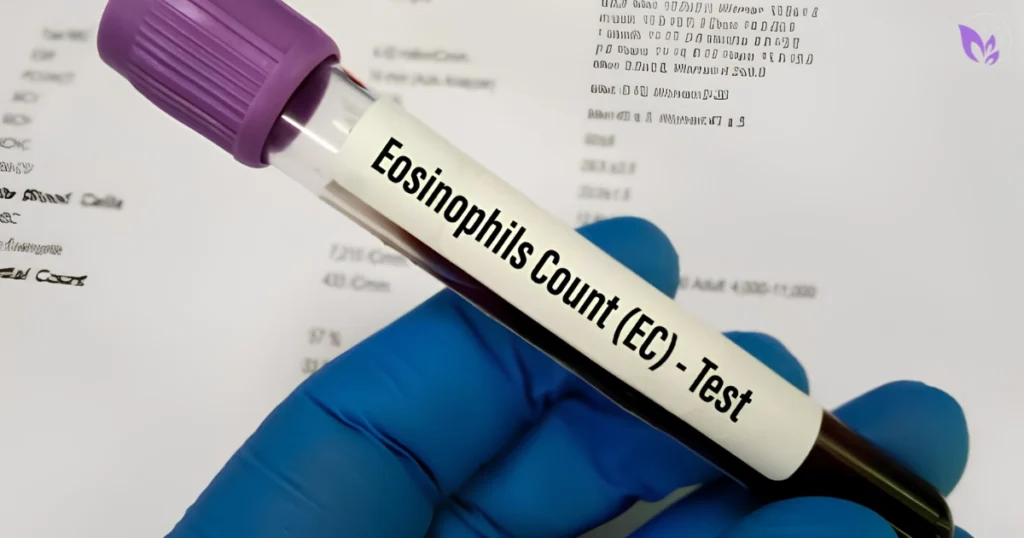
Seeing “high eosinophils” flagged on a blood test can raise a lot of questions, especially if you have also been dealing with digestive problems, unexplained skin symptoms, or a recent illness. One possibility people often come across while searching for answers is a parasitic infection.
There is a genuine connection between high eosinophils and certain parasites, but it is easy to read too much into that connection. Some parasitic worms can raise eosinophil levels, while many other conditions can do the same. Some parasite infections may not raise eosinophils at all.
That means an abnormal eosinophil result can sometimes provide a useful clue, but it cannot tell you by itself whether parasites are present. The type of eosinophil result, your symptoms, possible exposures, travel history, and other tests all matter.
Eosinophils are a type of white blood cell involved in the body’s immune response. They are measured as part of a complete blood count with differential, often called a CBC with differential.
When the number of eosinophils in the blood rises above the expected range, this is known as eosinophilia.
Eosinophilia can occur for many reasons. Allergies and asthma are common causes, but certain medications, inflammatory conditions, some blood disorders, and parasitic infections can also raise eosinophil levels.
So if your CBC shows elevated eosinophils, the result suggests something may be stimulating this part of the immune system. It does not identify the cause.
Yes. Certain parasitic infections can cause high eosinophils, especially infections caused by helminths, or parasitic worms.
The relationship is strongest with some worms that migrate through or invade body tissues during part of their life cycle. This type of tissue exposure can trigger an eosinophilic immune response.
However, high eosinophils do not automatically mean worms or parasites.
The eosinophil response can vary depending on:
This is why eosinophilia is better viewed as one possible clue rather than a parasite test.
Not every parasite affects eosinophils in the same way. Some helminth infections are more commonly associated with eosinophilia because of where the parasite lives or how it moves through the body.
Strongyloides stercoralis is a parasitic roundworm that can establish a long-lasting infection.
Some people with Strongyloides develop elevated eosinophils, particularly during certain stages of infection. However, eosinophilia is not present in every case and cannot confirm or exclude the infection by itself.
This makes Strongyloides and high eosinophils an important association, but not a diagnosis.
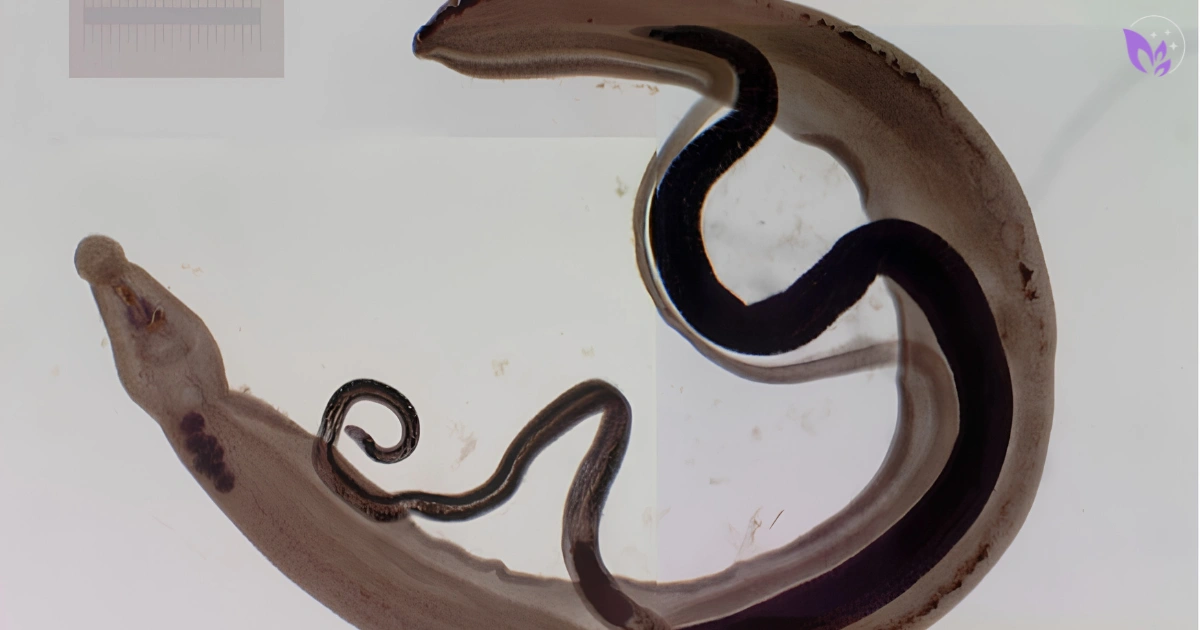
Schistosoma species are blood flukes associated with exposure to contaminated freshwater in parts of the world where the infection occurs.
Eosinophilia may develop during acute infection and can sometimes remain present later. The degree of elevation varies considerably between individuals.
For this reason, freshwater exposure and travel history can be more useful clues than the eosinophil number alone.
Toxocara larvae can migrate through human tissues, which can stimulate a noticeable eosinophilic response.
This pattern helps explain why tissue-migrating worms are often discussed when doctors investigate high eosinophils and parasites. The immune system is reacting not simply to the presence of a parasite but also to its interaction with body tissues.
Certain liver fluke infections may also be associated with eosinophilia, particularly during stages when immature parasites migrate through tissue.
Again, this does not mean everyone with a liver fluke infection will have high eosinophils. The blood result is only one part of the overall picture.
Yes. A normal eosinophil count does not rule out every parasitic infection.
This is an important distinction because the opposite assumption is common. If some parasites can raise eosinophils, people may expect a normal result to mean they definitely do not have parasites.
The immune response is more complicated than that.
Some parasites produce a stronger eosinophilic response than others. Eosinophil levels can also vary according to infection stage, prior exposure, medication use, and the person’s immune response.
In Post-Travel Parasitic Disease, eosinophilia is described as an important clue, but not a perfect marker of parasitic infection.
So the answer to “Do all parasites cause eosinophilia?” is no.
If you look closely at a CBC report, you may see eosinophils reported in two ways: as a percentage and as an absolute number.
| Test | What It Shows |
| EOS % | The percentage of total white blood cells made up of eosinophils |
| AEC | The actual number of eosinophils present in a specific volume of blood |
The EOS percentage can change when other types of white blood cells rise or fall, so it does not always provide the clearest picture by itself.
The absolute eosinophil count, or AEC, measures the actual number of eosinophils.
An AEC of around 500 cells/µL or above is commonly used as a threshold for eosinophilia, although laboratory reference ranges can differ.
That number needs to be interpreted correctly:
An AEC of 500 or higher may indicate eosinophilia. It does not indicate that parasites are the cause.
There is no specific eosinophil level that confirms a parasitic infection.
This is where eosinophil results can become confusing.
Both allergies and some parasitic infections can increase eosinophils, so an elevated result cannot reliably separate the two.
Instead, the surrounding circumstances become important.
A healthcare professional may consider:
Someone with seasonal allergies and no relevant parasite exposure has a different clinical picture from someone who develops unexplained eosinophilia after a significant travel or exposure history.
There is no single eosinophil percentage or absolute count that can reliably answer “parasites or allergies?”
If high eosinophils are unexplained and a parasitic infection is considered possible, the next step is not simply another eosinophil test.
Investigation usually starts with the person’s history.
Travel, residence, food and water exposure, contact with soil or freshwater, animal exposure, symptoms, medication use, and previous blood results can all help narrow down possible causes.
Testing then depends on the parasite being considered.
For some intestinal infections, stool testing may be useful. Other parasites may require specific blood tests, serology, imaging, or a different diagnostic approach.
Timing matters as well. In some helminth infections, eosinophils can rise while larvae are migrating through tissues, before the infection reaches a stage where eggs can be detected in stool.
This is another reason eosinophilia should not be interpreted separately from the rest of the clinical picture.
People experiencing gastrointestinal symptoms may also find it useful to understand how intestinal parasites in humans can present and how different infections are investigated.
Mahoney Supplements offers wellness support for digestive health, cleansing routines, and parasite-related concerns as part of a broader approach to everyday health.

A mildly abnormal eosinophil result does not automatically mean something serious. But persistent or unexplained eosinophilia deserves proper medical interpretation.
It is particularly worth discussing with a healthcare professional when high eosinophils occur alongside:
The goal is to identify the reason for the abnormal result rather than assuming parasites are responsible.
Parasites are one possible reason eosinophils may be elevated, but the connection is not straightforward enough to diagnose an infection from a CBC.
Certain worms are more likely to trigger eosinophilia, especially when they migrate through body tissues. Other parasites may cause little or no change. Allergies, medications, and several non-parasitic conditions can produce similar blood-test results.
If your eosinophils are high, the useful question is therefore not simply “Do I have parasites?” but “What fits with my symptoms, exposures, medical history, and the rest of my test results?”
That broader picture is what gives an eosinophil result its meaning.
No. Allergies, asthma, medications, inflammatory conditions, and several other health problems can also increase eosinophils. Parasitic infection is only one possible explanation.
Yes. Certain parasitic worms can cause eosinophilia, particularly species that migrate through or interact with body tissues. However, not every worm infection causes an elevated eosinophil count.
Strongyloides, Schistosoma, Toxocara, some liver flukes, and other helminths can be associated with eosinophilia. The strength of the response varies by parasite, infection stage, and individual.
No eosinophil level specifically indicates parasites. An elevated absolute eosinophil count identifies eosinophilia, but further evaluation is needed to determine the cause.
Yes. Some parasitic infections may occur with a normal eosinophil count. Normal eosinophils therefore cannot rule out every parasite infection.
No. Eosinophilia is more strongly associated with certain helminths, particularly tissue-migrating worms. Many other parasitic infections may cause little or no increase.
Yes. Allergic conditions are a well-recognized cause of eosinophilia. The eosinophil count alone cannot determine whether allergies, parasites, or another condition are responsible.
No. Eosinophils can provide a useful clue, but confirming a parasitic infection requires the right clinical history and, when appropriate, parasite-specific testing.
Disclaimer: This article is for educational purposes only and is not a substitute for professional medical advice, diagnosis, or treatment.


Noor-ul-Ain is a Tech & SEO Content Writer with over 4 years of experience creating search-optimized content for digital platforms. She specializes in SaaS products, AI tools, SEO strategy, and product documentation, helping platforms turn complex features into clear, search-driven growth. Noor-ul-Ain has also written extensively on health science, sports, fitness, fashion, and beauty, focusing on informative and reader-friendly content.
Probiotics and prebiotics are often mentioned together, but they aren’t the same. Understanding the difference between probiotics and prebiotics can

Have you ever noticed that a supplement works very well for one person but produces little noticeable change for another?

Coffee or tea is part of many people’s daily routine, and for many supplement users, mornings are the easiest time