
TNM Liver Support Ingredients Explained: Formula Breakdown, Benefits & Key Nutrients
When choosing a liver support supplement, the ingredient panel often tells you more than the front label. Understanding why each

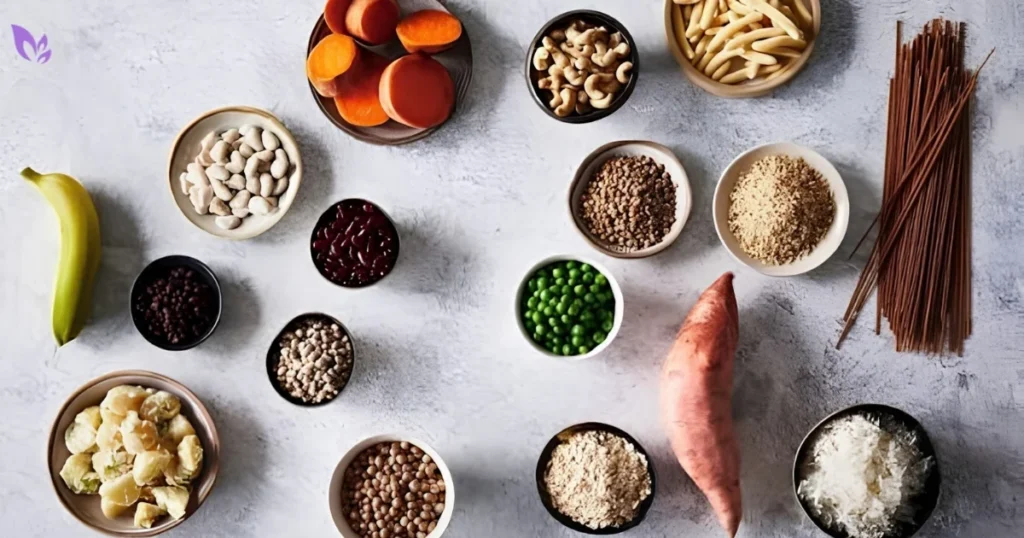
Resistant starch resists digestion in the small intestine and reaches the large intestine, where gut microbes can ferment it. How you prepare foods like rice, potatoes, and pasta can also change how much you get. Here is how resistant starch works, where to find it, and what current research suggests.
Resistant starch is the portion of starch that resists digestion in the small intestine. Most digestible starch is broken down into glucose and absorbed before reaching the colon. Resistant starch largely escapes this process and travels to the large intestine, where microorganisms ferment it.
Because it reaches the colon and can be fermented, it shares some characteristics with fermentable fiber. It occurs naturally in some plant foods and can also form when certain starchy foods are cooked and cooled.
Regular starch is generally more accessible to digestive enzymes, while resistant starch is less available for digestion in the small intestine. This changes where the body processes the carbohydrate
| Regular starch | Resistant starch |
| More readily digested in the small intestine | Resists much of small-intestinal digestion |
| Broken down largely into glucose | Much of it reaches the large intestine |
| Mainly absorbed before reaching the colon | Fermented by gut microbes in the colon |
| Primarily functions as a digestible carbohydrate | Can behave partly like fermentable fiber |
Resistant starch isn’t a zero-calorie carbohydrate; it still provides energy.
Researchers commonly describe five main forms of resistant starch.
Physically inaccessible starch trapped within intact plant structures, such as some whole grains, seeds, and legumes.
Naturally resistant starch with a compact granular structure. Green bananas and raw potatoes are familiar examples.
Retrograded starch formed after a starchy food is cooked and subsequently cooled.
Chemically modified starch designed to resist digestion. This form matters more for food formulation than for ordinary home cooking.
Starch-lipid complexes formed when starch interacts with certain fats or fatty acids. I n everyday foods, people are most likely to encounter RS1, RS2, and especially RS3.
Resistant starch provides a substrate that certain gut microorganisms can ferment. This fermentation produces short-chain fatty acids (SCFAs), including acetate, propionate, and butyrate. Butyrate gets particular attention because colon cells can use it as a key energy source.
The relationship can be summarized simply:
Resistant starch → colon → microbial fermentation → SCFAs → interactions with the gut environment
Research suggests that resistant starch can influence gut microbial communities and short-chain fatty acid (SCFA) production, although individual responses may vary. Factors such as the type and amount of resistant starch consumed, overall dietary patterns, and existing gut microbes can affect these outcomes. Probiotics and prebiotics discuss the relationship between dietary components and beneficial bacteria.
The gut microbiome plays an important role in how dietary components, including fiber and resistant starch, interact with intestinal microorganisms. Differences in microbial composition can influence how individuals respond to the same foods. The gut microbiome, its relationship with diet, and microbial balance provide further context for these connections.
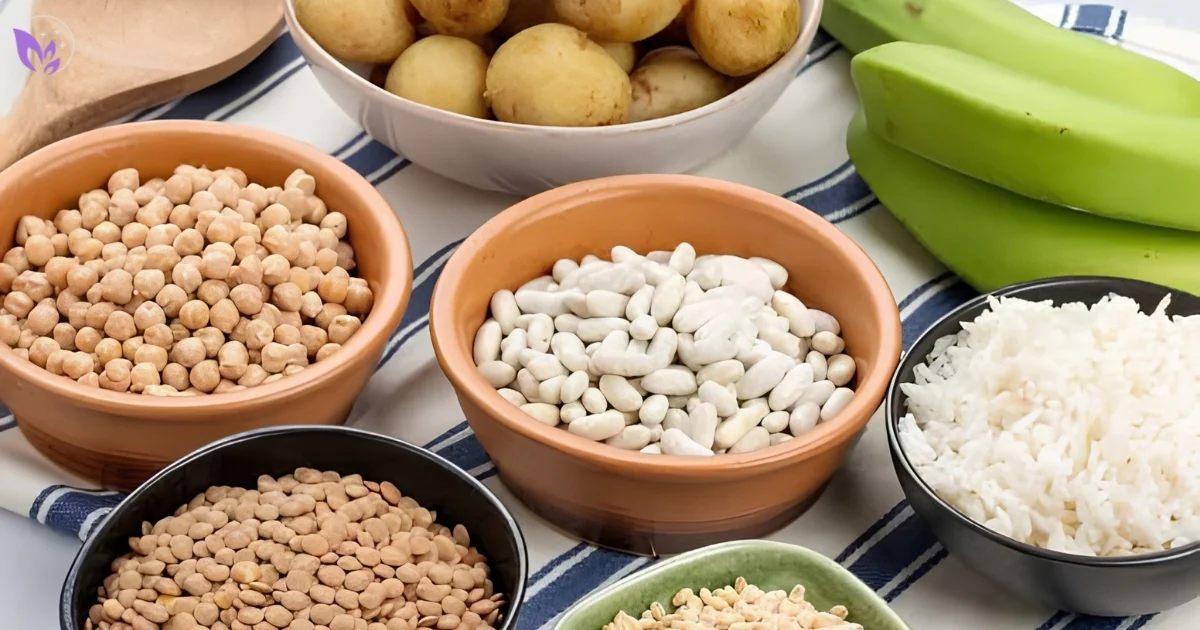
You do not need a special resistant-starch product to include this type of carbohydrate in your diet. Several ordinary foods contain resistant starch, although amounts vary with variety, ripeness, processing, cooking, and storage.
| Food | Why it can provide resistant starch |
| Green bananas | Naturally rich in RS2 |
| Beans | Resistant starch plus dietary fiber |
| Lentils | Legume source of resistant starch and fiber |
| Chickpeas | Resistant starch and other fermentable carbohydrates |
| Oats | Resistant starch alongside other fiber |
| Barley | Whole-grain source |
| Cooked and cooled potatoes | Cooling can increase RS3 |
| Cooked and cooled rice | Cooling can increase RS3 |
Green bananas contain more resistant starch than ripe bananas because ripening converts some starch into simpler sugars. Legumes provide resistant starch and fiber, while preparation affects potatoes and rice most.
When starchy foods are heated with water, their starch structure changes through gelatinization. As the cooked food cools, some starch molecules reorganize through a process called retrogradation, forming more RS3.
Cooked and cooled rice, potatoes, and pasta can therefore provide RS3. Cooling does not make all starch resistant; the amount varies with the food and preparation.
If you are cooling cooked rice, food safety matters too. Cool it quickly, ideally within one hour, refrigerate it promptly, and use it within 24 hours rather than leaving it at room temperature.
Research suggests several potential benefits from how it’s digested and fermented by gut microbes.
Potential areas of interest include:
Research on resistant starch and blood sugar is promising, but results vary by resistant-starch type, dose, food source, and study population. These factors also shape its effects on digestion and gut bacteria. Research on resistant starch and the gut microbiome examines how resistant starch affects the composition and activity of gut microorganisms.
Similarly, evidence linking resistant starch to weight loss or weight management should not be interpreted as proof that consuming resistant starch alone causes weight loss. Although it may influence certain aspects of metabolic health, further research is needed to establish its effects across different populations. Recent evidence on resistant starch and metabolic health addresses current findings and the need for longer, more standardized human trials.
It can, especially when you increase intake quickly. Fermentation may cause gas, bloating, or digestive discomfort in some people.
Increase resistant-starch foods gradually and pay attention to how your digestive system responds. Don’t attribute severe or persistent symptoms solely to resistant starch.
Resistant starch is not a magic ingredient or a replacement for a balanced diet. Its main value is that much of it reaches the colon, where microbes ferment it and produce SCFAs.
Mahoney Inter offers a range of supplements for gut health and overall wellness.
A simple approach is to vary your food sources rather than focus on one “best” resistant-starch food. Green bananas, legumes, oats, barley, and properly handled cooked-and-cooled foods can all contribute. If your diet is currently low in fermentable carbohydrates, increase them gradually and pay attention to how your digestive system responds.
Resistant starch is technically starch, not a conventional dietary-fiber category. However, because much of it resists digestion and reaches the colon for fermentation, it can behave similarly to fermentable fiber.
Some forms of resistant starch can have prebiotic effects because they reach the colon and provide a substrate for microbial fermentation. However, “resistant starch” and “prebiotic” are not interchangeable, and effects depend on the starch type and individual gut microbiome.
It can. Cooling cooked rice encourages starch retrogradation, which can increase RS3. The exact amount varies by rice type, cooking method, cooling conditions, and storage.
Yes. Gut microbes ferment it and produce gas, so increasing resistant-starch intake quickly may cause temporary bloating or digestive discomfort.
Common sources include green bananas, legumes, oats, barley, and cooked-then-cooled foods such as potatoes and rice. Exact amounts vary by food and preparation.
Disclaimer: This article is for educational purposes only and is not intended to diagnose, treat, cure, or prevent any disease or replace professional medical advice. If you have persistent digestive symptoms or a medical condition, speak with a qualified healthcare professional.


Noor-ul-Ain is a Tech & SEO Content Writer with over 4 years of experience creating search-optimized content for digital platforms. She specializes in SaaS products, AI tools, SEO strategy, and product documentation, helping platforms turn complex features into clear, search-driven growth. Noor-ul-Ain has also written extensively on health science, sports, fitness, fashion, and beauty, focusing on informative and reader-friendly content.
When choosing a liver support supplement, the ingredient panel often tells you more than the front label. Understanding why each

Collagen is one of the body’s main structural proteins, which is why collagen supplements have become popular for skin, joints,

Astaxanthin has gone from a little-known marine pigment to a familiar name in supplement discussions. But what exactly is it,