

Finding answers about fatigue, gut problems, or recurring illness often leads people to questions about hidden threats within their bodies. Around the world, parasitic infections impact millions, shaping immune function and wellness far beyond what most realize. These stealthy organisms manipulate the immune system in surprising ways, creating symptoms that last for years if untreated. This guide explains how immune system parasites operate, why they are a growing global concern, and what you need to know about effective parasite cleansing for true immune support.
Table of Contents
- What Are Immune System Parasites?
- Types and Transmission of Human Parasites
- How Parasites Affect Immune Function
- Risks, Misconceptions, and Detox Methods
- Safe Parasite Cleansing and Supplement Use
Key Takeaways
| Point | Details |
|---|---|
| Understanding Parasite Interactions | Parasites manipulate the immune system to establish chronic infections, leading to dysregulation that can exhaust immune responses. |
| Importance of Proper Treatment | Effective management requires accurate diagnosis and prescription medications, rather than reliance on unverified herbal cleanses. |
| Nutrient Repletion | Addressing nutritional deficiencies is vital as parasites can deplete essential nutrients, compromising immune function. |
| Caution with Detox Products | Many detox methods lack scientific support and can pose health risks; consult healthcare providers before starting any regime. |
What Are Immune System Parasites?
Immune system parasites are organisms that live inside your body and actively evade your immune defenses to survive long-term. These aren’t just passive infections that your body naturally clears—they’re sophisticated invaders that have evolved specific strategies to manipulate your immune system.
Parasites range from single-celled protozoa to larger helminths (worms). What makes them unique is their ability to establish chronic infections, sometimes lasting years or even a lifetime if untreated. They do this by triggering immune dysregulation, where your immune system either becomes suppressed or hyperactive in ways that actually protect the parasite rather than eliminate it.
How Parasites Interact with Your Immune System
Your immune system has two main defense mechanisms: innate immunity (your first-line defenders) and adaptive immunity (your specialized responders). Parasitic infections trigger distinct immune responses depending on the parasite type—protozoan parasites activate cell-mediated immunity, while helminths prompt antibody production.
Here’s where it gets complicated. Parasites have evolved remarkable immune evasion tactics:
- Antigenic variation: Constantly changing their surface proteins so your immune system can’t recognize them
- Immunomodulation: Actively suppressing your immune response through chemical signals
- Immune tolerance: Tricking your body into treating them as harmless
- Chronic inflammation: Causing low-level inflammation that damages tissues while keeping the parasite alive
The result? Parasites and chronic illness often develop together because parasites disable the immune mechanisms that would normally eliminate them. This creates a stalemate where neither your immune system nor the parasite wins completely.
The Cost to Your Wellness
This chronic infection state affects multiple body systems. Your energy levels drop because resources go toward managing inflammation. Your nutrient absorption suffers as parasites feed and damage your gut lining. Your immune system becomes dysregulated, making you more vulnerable to other infections while simultaneously overreacting to harmless substances.
Understanding how parasites manipulate immunity is crucial because treatment goes beyond simply eliminating the organisms. Your immune system needs support to recover from the dysregulation parasites create.
Parasites survive by keeping your immune system in a constant state of imbalance—neither fully activated nor fully suppressed.
Pro tip: Addressing parasites early, before chronic dysregulation becomes severe, makes recovery significantly faster because your immune system hasn’t been compromised as long.
Types and Transmission of Human Parasites
Human parasites fall into three main categories, each with distinct characteristics and transmission routes. Understanding which type you might encounter helps explain how infections happen and why prevention strategies differ.
The Three Major Parasite Groups
Protozoa are single-celled organisms that live inside your cells or bloodstream. They’re invisible to the naked eye but cause serious diseases like malaria and giardiasis. Helminths are larger worms—roundworms, tapeworms, and flukes—that can grow to several inches long inside your intestines. Ectoparasites live on your skin rather than inside your body, including ticks, fleas, and lice.

Each group requires different treatment approaches because they inhabit different body locations and reproduce differently.
Here’s a summary comparing the three major types of human parasites:
| Parasite Type | Body Location | Example Diseases | Transmission Route |
|---|---|---|---|
| Protozoa | Inside cells/bloodstream | Malaria, giardiasis | Contaminated water/food, vectors |
| Helminths | Intestines, tissues | Tapeworm, roundworm | Soil, unwashed produce, undercooked meat |
| Ectoparasites | On skin/external surface | Scabies, lice | Direct contact, contaminated objects |
How Parasites Spread to Humans
Human parasitic infections transmit through contaminated soil, water, food, insect vectors, and direct human contact. The transmission route depends entirely on the parasite type:
- Waterborne transmission: Drinking contaminated water containing parasite eggs or larvae
- Foodborne transmission: Eating undercooked meat or unwashed vegetables harboring parasites
- Vector transmission: Mosquitoes, flies, and ticks inject parasites directly into your bloodstream
- Soil contact: Walking barefoot or handling contaminated soil allows parasites to penetrate your skin
- Direct person-to-person: Some parasites spread through fecal matter or close contact
Globalization and climate change have expanded parasite ranges. Diseases once limited to tropical regions now appear in temperate zones as conditions warm and travel increases.
Geographic Distribution Matters
Your location affects your infection risk significantly. Soil-transmitted helminths infect approximately one billion people globally, particularly in areas with poor sanitation. Mosquito-borne malaria causes hundreds of millions of cases annually. Understanding how parasites affect health varies by geography and local transmission patterns, which is why prevention looks different in different regions.
Travelers to high-risk areas face substantially higher exposure than residents of developed countries with clean water systems and food safety standards.
Most parasite transmission is preventable through basic hygiene, clean water, and proper food handling.
Pro tip: If you’ve traveled to tropical or developing regions or experience unexplained digestive symptoms, request specific parasite testing rather than assuming it’s simple food poisoning—early detection makes treatment far more effective.
How Parasites Affect Immune Function
Parasites don’t just live in your body—they actively reshape how your immune system works. They’ve evolved sophisticated mechanisms to suppress, manipulate, and even reprogram your immune responses so they can survive indefinitely.
Your immune system has two main branches that work together. The innate immune system acts as your immediate defense, while the adaptive immune system develops specialized responses over time. Parasites interfere with both branches, creating an imbalance that makes you vulnerable to other infections while simultaneously fueling chronic inflammation.
The Immune Suppression Strategy
Parasites manipulate the host immune system through evasion and suppression to ensure survival. They produce chemical molecules that literally shut down immune cell activation and promote regulatory immune responses that reduce inflammation. This sounds beneficial, but it’s actually a trap—your body becomes so focused on preventing overreaction that it stops fighting the parasite effectively.
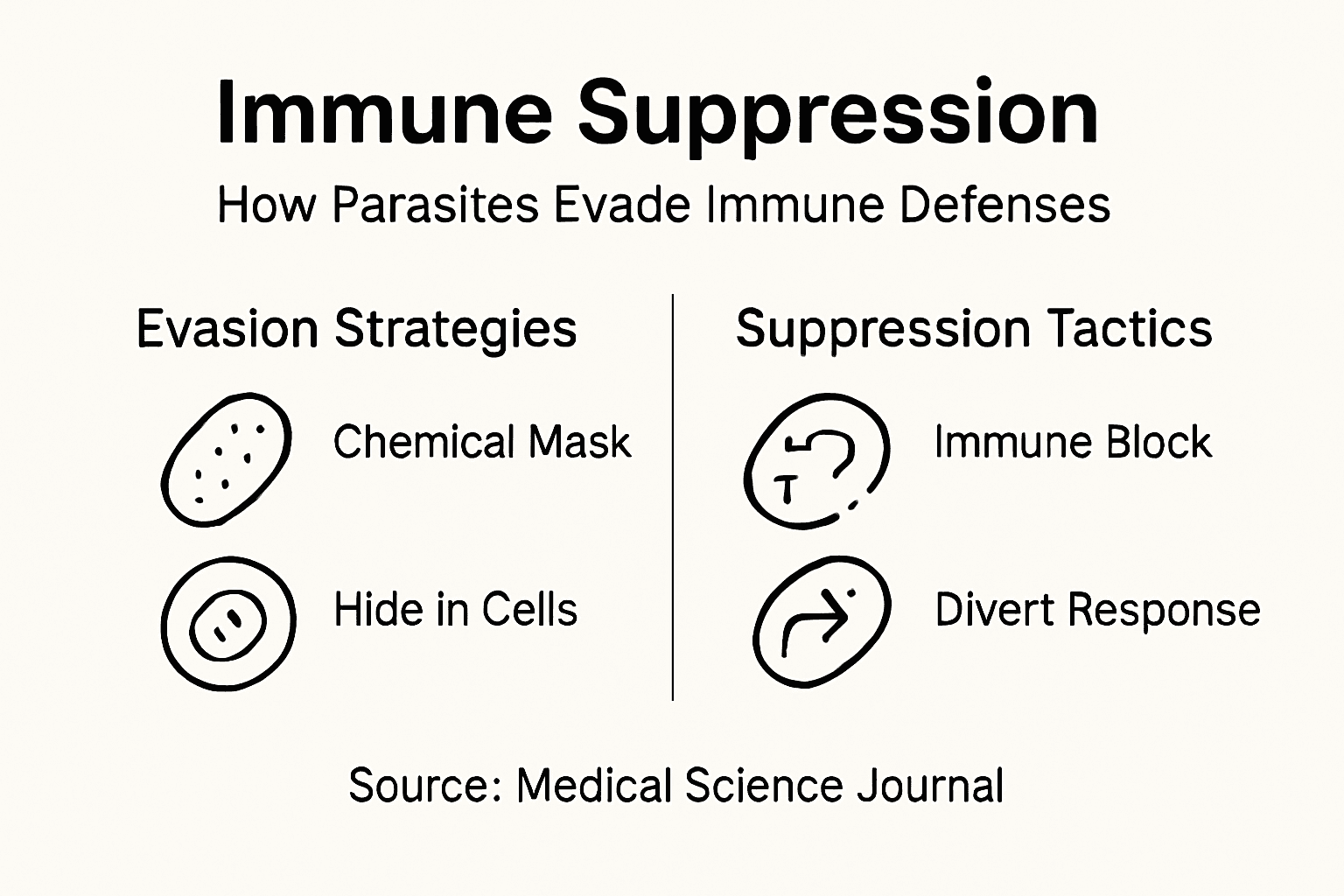
Think of it like a home security system deliberately disabled by an intruder. The system isn’t broken; it’s been redirected to protect the invader instead of you.
Type I and Type II Immune Dysregulation
Parasites drive both Th1 and Th2 immune responses, shaping immune system development. Different parasites trigger different immune patterns:
- Type I response (Th1): Activates aggressive immune cells; overuse causes autoimmunity
- Type II response (Th2): Produces antibodies; excessive Th2 causes allergies and asthma
- Regulatory response: Suppresses both, allowing parasites to thrive
The problem is chronic activation of either system exhausts your immune cells. They become like firefighters working nonstop—eventually too tired to respond to real emergencies.
Nutrient Theft and Immune Collapse
Parasites consume nutrients your immune system desperately needs. When you lack vitamin A, zinc, iron, and selenium, immune cell production crashes. Parasites and nutrient absorption directly impact your ability to mount effective immune responses, creating a vicious cycle where malnutrition worsens immune suppression.
Parasites win by turning your immune system into their protector rather than their enemy.
Pro tip: Monitor your immune markers—white blood cell counts, antibody levels, and inflammatory markers—before and during parasite treatment to track immune recovery and adjust your wellness protocol accordingly.
Risks, Misconceptions, and Detox Methods
The parasite detox market thrives on fear and oversimplified solutions. Most commercial cleanses lack scientific backing, yet people spend billions annually on products that don’t work or worse, cause harm.
The Misconception Problem
Many believe herbal cleanses alone can eliminate parasites. Reality is different. Parasite cleanses using herbal supplements claim to rid the body of parasites, but lack clinical evidence of effectiveness. Common ingredients like wormwood, clove, and anise are unregulated and unproven for parasite elimination.
The issue: parasitic infections require proper medical diagnosis and prescription antiparasitic treatment. Relying solely on cleanses delays effective care, allowing parasites to cause ongoing damage.
Genuine Risks of Unproven Detox Products
Commercial detox programs marketed for toxin removal create real health dangers:
- Unregulated supplements: Contain unlisted ingredients, heavy metals, or harmful contaminants
- Severe dehydration: Fasting and extreme diets deplete electrolytes dangerously
- Nutrient deficiencies: Restrictive cleanses worsen malnutrition parasites already cause
- Drug interactions: Herbal products interfere with medications, especially blood thinners
- Organ stress: Intense cleanses strain kidneys and liver, the organs you’re supposedly helping
Detox and cleanse programs lack robust scientific evidence and can pose real health risks, particularly for people with existing health conditions. Regulatory agencies have taken action against numerous commercial detox products for making false claims.
What Actually Works
Effective parasite management combines three elements:
- Proper diagnosis: Stool testing, blood work, or imaging identifies specific parasites
- Targeted treatment: Prescription antiparasitic medications eliminate the infection
- Nutritional support: Addressing deficiencies your immune system and body need to recover
Evidence-based detox protocols focus on supporting your body’s natural elimination systems rather than forcing artificial purges. This means adequate hydration, nutrient-dense foods, liver support, and sometimes carefully selected supplements—not extreme restrictions.
The difference between marketing hype and reality matters. Your body already detoxifies through your liver, kidneys, and digestive system. Supporting these systems safely works better than stressing them further.
Effective parasite management requires diagnosis and treatment, not just hope and herbal tea.
Pro tip: If considering any detox or cleanse protocol, consult a healthcare provider first—especially if you take medications, have kidney or liver issues, or are pregnant, as even “natural” cleanses can cause serious complications.
Safe Parasite Cleansing and Supplement Use
Safe parasite management requires combining evidence-based treatment with targeted nutritional support. This means prescription medications where needed, strategically chosen supplements, and careful timing to minimize side effects while maximizing recovery.
Prescription Antiparasitic Medications
When parasites are confirmed through proper testing, prescription medications are the gold standard. Ivermectin and albendazole combination therapy safely and effectively treats parasitic worm infections including soil-transmitted helminths. These medications disrupt parasite nervous systems and metabolism, immobilizing and killing them.
Both drugs appear on the World Health Organization essential medicines list, confirming their safety and efficacy profiles. They’re pharmaceutical-grade, standardized dosing, and have undergone rigorous clinical testing—unlike herbal cleanses.
Supporting Treatment with Supplements
Supplements work best alongside prescription treatment, not replacing it. The right ones support your body during the elimination process:
- Liver support: Milk thistle and NAC help your liver process parasite debris and dead organisms
- Gut health: Probiotics and fiber rebuild intestinal lining parasites damage
- Nutrient repletion: Zinc, iron, and vitamin A restore immune function
- Binders: Activated charcoal may help capture toxins released during parasite death
- Anti-inflammatory support: Omega-3s and curcumin reduce inflammation from parasite immune reactions
Quality matters enormously. Choose pharmaceutical-grade supplements with third-party testing, not cheap grocery store products with unknown ingredients.
To clarify which treatment approaches are used, here’s a comparison table:
| Approach | Main Use | Professional Oversight | Risks if Misused |
|---|---|---|---|
| Prescription medication | Eliminating confirmed parasites | Always required | Side effects, drug interactions |
| Nutritional supplements | Supporting immune recovery | Recommended | Overdosing, poor quality products |
| Herbal cleanses | Alternative remedy | Rare | Unregulated, little scientific backing |
Timing and Safety Protocols
Proper sequencing prevents overwhelming your system. Following step-by-step cleanse instructions ensures systematic parasite removal with minimal uncomfortable side effects. Most protocols space treatment phases weeks apart, allowing your body to process and eliminate parasites gradually.
This staged approach gives your immune system time to recover between phases rather than shocking your system all at once.
When to Avoid Cleansing
Certain conditions require medical supervision or avoiding aggressive cleansing entirely:
- Pregnancy or breastfeeding
- Kidney or liver disease
- Taking blood thinners or immunosuppressants
- Active infections or fever
- Severe malnutrition
Your healthcare provider must know your complete health picture before any parasite treatment begins.
Safe cleansing combines medical treatment with strategic supplementation, not herbal hopes.
Pro tip: Start any new supplement regimen at low doses and increase gradually over a week, monitoring how your body responds—this minimizes detoxification reactions and helps identify any adverse reactions early.
Take Control of Your Immune Health by Targeting Parasites Now
Dealing with immune system parasites can leave you feeling drained and vulnerable, as these invaders disrupt your immune balance and rob your body of vital nutrients. If you want to break free from chronic inflammation and restore your wellness, taking a safe and effective approach to parasite cleansing is essential. Our selection of pharmaceutical-grade supplements supports targeted parasite elimination while helping rebuild your immune defenses and liver function.

Explore our trusted products like ivermectin, NAC, and liver support complexes at Mahoney Inter. Start your journey with expert-reviewed protocols designed to safely clear parasites and replenish your body’s natural defenses today. Waiting only prolongs immune dysregulation—take action now for long-term wellness at https://mahoneyinter.com.
Frequently Asked Questions
What are immune system parasites?
Immune system parasites are organisms that evade your body’s immune defenses to survive long-term, often establishing chronic infections that last for years or longer if untreated.
How do parasites affect the immune system?
Parasites manipulate both innate and adaptive immune responses, creating imbalances that can suppress your immune system or trigger chronic inflammation, making you more susceptible to additional infections.
What types of parasites affect humans and how do they spread?
The three main types of parasites are protozoa, helminths, and ectoparasites. They can spread through contaminated water, food, insect bites, soil contact, or direct human contact.
How can I support my immune system during parasite treatment?
Supporting your immune system involves proper diagnosis, targeted prescription treatments, and nutritional support to replenish any deficiencies, such as vitamins and minerals, and promote gut health.