

Worrying about what might be lurking in your digestive system is not just a concern for those living in regions with poor sanitation. Everyday exposure through contaminated food, soil, or surfaces can introduce stomach parasites that quietly undermine your wellness. Understanding what these organisms are and how to identify them is the first step toward supporting your body’s natural defenses and embracing holistic strategies for healthier digestion and stronger immunity.
Table of Contents
- What Are Stomach Parasites In Poop?
- Common Types And How They Spread
- Symptoms And Potential Health Risks
- Testing Methods And Medical Diagnosis
- Natural And Pharmaceutical Treatment Options
- Preventing Reinfection And Long-Term Solutions
Key Takeaways
| Point | Details |
|---|---|
| Understanding Stomach Parasites | Stomach parasites, including protozoa and helminths, can cause significant health issues and are transmitted through contaminated food, water, or surfaces. |
| Symptoms and Risks | Symptoms range from mild digestive disturbances to severe health complications, with children and immunocompromised individuals being particularly vulnerable. |
| Diagnosis and Testing | Accurate diagnosis requires laboratory techniques, including stool examination and advanced molecular assays, to identify specific parasitic infections. |
| Prevention Strategies | Effective prevention combines personal hygiene, community education, and improved sanitation practices to reduce the transmission of intestinal parasites. |
What Are Stomach Parasites In Poop?
Stomach parasites are microscopic organisms that inhabit the human gastrointestinal system, surviving by consuming nutrients from their host and reproducing through complex transmission mechanisms. Intestinal parasitic infections represent a significant global health challenge affecting millions of people worldwide.
These organisms come in two primary categories: protozoa (single-celled organisms) and helminths (worms), each with unique characteristics and transmission routes. Common stomach parasites include:
- Pinworms: Tiny white worms most prevalent in children
- Roundworms: Long, cylindrical worms that can grow several inches
- Hookworms: Blood-feeding parasites that attach to intestinal walls
- Whipworms: Thin worms resembling whips that inhabit the large intestine
Parasites typically enter the human body through contaminated food, water, soil, or contact with infected surfaces. Once inside, they establish residence in the intestinal tract, feeding on nutrients and potentially causing various health complications. Their survival strategy involves releasing eggs through human feces, which enables their spread to new hosts.
Stomach parasites represent a complex biological system designed for survival and reproduction within human hosts.
The presence of parasites in stool can indicate an active infection, with symptoms ranging from mild digestive disturbances to more severe health issues. Detection often requires microscopic examination of stool samples, which can reveal eggs, larvae, or adult parasitic organisms.
Pro tip: Practice strict hygiene protocols like thorough handwashing, consuming properly cooked foods, and avoiding contaminated water sources to minimize parasite transmission risks.
Common Types and How They Spread
Stomach parasites encompass a diverse range of microscopic organisms that infiltrate the human digestive system through various transmission routes. Common intestinal parasites include both protozoa and helminths, each with unique characteristics and methods of spread.
The primary types of stomach parasites can be categorized into two main groups:
Protozoan Parasites:
- Giardia: Causes watery diarrhea and intestinal distress
- Amoebae: Responsible for dysentery and liver abscesses
- Cryptosporidium: Often spreads through contaminated water
Helminth (Worm) Parasites:
- Roundworms: Long cylindrical worms that inhabit the intestines
- Hookworms: Blood-feeding parasites that attach to intestinal walls
- Pinworms: Tiny white worms most common in children
- Tapeworms: Segmented parasites absorbed through contaminated meat
Transmission of these parasites occurs primarily through the fecal-oral route, involving ingestion of contaminated food, water, or direct contact with infected surfaces. Some parasites can penetrate the skin, while others require direct consumption of eggs or cysts. Parasitic infections spread most effectively in environments with poor sanitation and limited hygiene practices.
Parasitic transmission represents a complex cycle of survival and reproduction that exploits human behavioral and environmental conditions.
Certain populations face higher risks of parasite transmission, including children, travelers to endemic regions, and individuals with compromised immune systems. The transmission mechanism depends on the specific type of parasite, with some spreading through contaminated soil, others through undercooked meat, and some through direct human-to-human contact.
Pro tip: Implement rigorous hand hygiene, thoroughly wash produce, cook meats completely, and avoid walking barefoot in potentially contaminated areas to significantly reduce parasite transmission risks.
Symptoms and Potential Health Risks
Intestinal parasites can trigger a wide range of symptoms that significantly impact overall health and well-being. Intestinal parasitic infections manifest through complex physiological responses that affect multiple body systems.
The primary symptoms of stomach parasites include:
-
Gastrointestinal Disturbances:
- Chronic diarrhea
- Abdominal pain and cramping
- Nausea and vomiting
- Unexplained changes in bowel movements
-
Nutritional and Systemic Impacts:
- Unexpected weight loss
- Persistent fatigue
- Nutritional deficiencies
- Anemia
Children face particularly severe risks, with parasite infections potentially causing developmental delays and long-term health complications. The impact extends beyond immediate symptoms, potentially disrupting physical and cognitive growth.
Parasitic infections represent a silent threat that can gradually undermine an individual’s overall health and immune system functionality.
Some parasites cause more specific health risks, including intestinal obstruction, malnutrition, and compromised immune response. Chronic infections can lead to significant morbidity, especially in regions with limited healthcare access. Vulnerable populations like children, elderly individuals, and those with weakened immune systems face the highest risk of severe complications.

Here’s a summary of key parasite types, their main symptoms, and primary risks:
| Parasite Type | Common Symptom | Primary Health Risk |
|---|---|---|
| Protozoa (Giardia) | Watery diarrhea | Dehydration, malabsorption |
| Amoebae | Dysentery, cramps | Liver abscess, severe colitis |
| Roundworm | Stomach pain | Intestinal blockage |
| Hookworm | Fatigue, anemia | Iron deficiency anemia |
| Pinworm | Anal itching | Sleep disruption, reinfection |
| Tapeworm | Weight loss | Nutrient deficiency |
Pro tip: Consult a healthcare professional immediately if you experience persistent digestive symptoms, unexplained weight loss, or suspect potential parasite exposure, as early detection can prevent more serious health complications.
Testing Methods And Medical Diagnosis
Medical diagnosis of intestinal parasites requires a comprehensive and systematic approach to accurately identify and confirm infection. Diagnosis of intestinal parasites involves multiple laboratory techniques designed to detect parasitic presence with high precision.
The primary diagnostic methods include:
Stool Examination Techniques:
- Direct microscopic analysis
- Concentration methods
- Repeated sampling
- Specialized staining procedures
Advanced Diagnostic Technologies:
- Polymerase Chain Reaction (PCR)
- Direct fluorescent antibody testing
- Serologic blood tests
- Molecular diagnostic assays
Medical professionals typically recommend a multi-step diagnostic process to ensure accurate identification. Laboratory confirmation techniques have significantly improved parasite detection sensitivity, moving beyond traditional microscopy approaches.
Accurate parasite diagnosis requires sophisticated laboratory techniques and expert clinical interpretation.
Different parasites demand specific diagnostic strategies. Some require concentrated stool samples, while others might necessitate blood tests or advanced molecular screening. Clinical symptoms alone are insufficient, making laboratory confirmation crucial for developing an effective treatment plan.
The following table compares common stool and advanced testing methods used for diagnosing intestinal parasites:
| Diagnostic Approach | How It Works | Detection Accuracy |
|---|---|---|
| Microscopy | Visual egg/larvae search | Moderate, operator dependent |
| Concentration Method | Separates parasite parts | Improved for low counts |
| PCR Assay | Detects parasite DNA | High, very specific |
| Serology | Measures body response | Useful for some parasites |
Pro tip: Collect multiple stool samples across different days and follow your healthcare provider’s precise collection instructions to maximize diagnostic accuracy.
Natural And Pharmaceutical Treatment Options
Parasite treatment requires a comprehensive approach combining pharmaceutical interventions and targeted medical strategies. Intestinal parasitic treatment involves multiple approaches designed to eliminate parasites and support patient recovery.
Pharmaceutical treatment options include several key medications:
Pharmaceutical Antiparasitic Drugs:
- Albendazole: Broad-spectrum treatment for multiple worm infections
- Mebendazole: Effective against roundworms and hookworms
- Metronidazole: Targets protozoal infections
- Ivermectin: Treats various parasitic infestations
- Nitazoxanide: Addresses both protozoan and helminthic infections
Natural Complementary Approaches:
- Garlic supplements
- Oregano oil
- Papaya seed extract
- Pumpkin seed treatments
- Probiotics to restore gut health
Medical professionals recommend targeted treatment protocols based on specific parasite identification. Each medication targets different parasitic organisms with varying mechanisms of action, requiring precise diagnostic confirmation before treatment initiation.
Effective parasite treatment demands a personalized medical approach combining pharmaceutical intervention and comprehensive patient support.
While pharmaceutical treatments remain the primary intervention, holistic strategies can support recovery and prevent reinfection. Nutritional support, improved hygiene practices, and follow-up testing are crucial components of successful parasite management.
Pro tip: Always complete the full course of prescribed antiparasitic medication, even if symptoms improve, to ensure complete parasite elimination.
Preventing Reinfection And Long-Term Solutions
Parasite prevention requires a comprehensive strategy addressing multiple health and environmental factors. Preventing intestinal worm transmission demands a multifaceted approach combining personal hygiene, public health measures, and ongoing education.
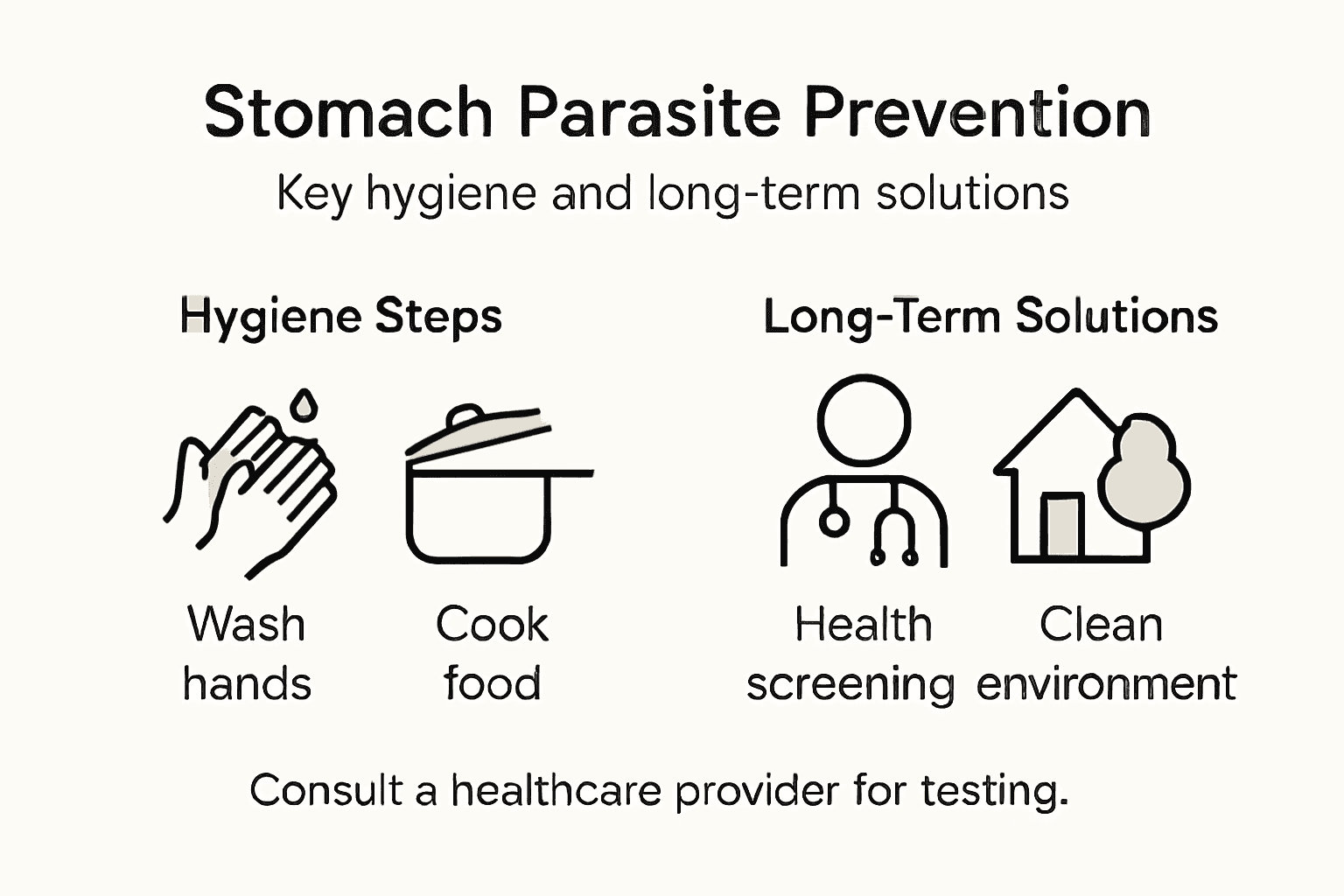
Key prevention strategies include:
Personal Hygiene Practices:
- Wash hands thoroughly with soap
- Use clean, treated water
- Cook food completely
- Wear shoes in potentially contaminated areas
- Practice regular personal cleanliness
Community-Level Prevention:
- Improve sanitation infrastructure
- Implement mass deworming programs
- Educate communities about transmission risks
- Ensure safe waste disposal
- Promote clean water access
Medical professionals recommend systematic prevention approaches that address both individual and community-wide transmission mechanisms. Long-term solutions require sustained efforts in public health infrastructure and consistent personal health practices.
Successful parasite prevention transcends individual actions, requiring coordinated community-wide interventions.
Comprehensive prevention involves understanding transmission routes, maintaining rigorous personal hygiene, and supporting broader public health initiatives. Regular medical screening, especially in high-risk populations, can help detect and interrupt potential infection cycles before they become widespread.
Pro tip: Schedule periodic health screenings and maintain consistent hygiene practices, treating prevention as an ongoing lifestyle commitment rather than a temporary intervention.
Take Control of Stomach Parasites with Trusted Solutions
Stomach parasites in poop highlight a serious health challenge that demands swift action. Persistent symptoms like abdominal pain, unexplained weight loss, and fatigue signal that parasitic infections could be disrupting your digestive and immune systems. Protect yourself with safe and effective parasite cleanse products designed to target these hidden threats and support your body’s natural defenses.

Explore pharmaceutical-grade supplements such as ivermectin and fenbendazole along with holistic liver support complexes at Mahoney Inter. Our carefully formulated products emphasize purity and results backed by science for parasite removal and overall wellness. Act now to regain digestive health and reduce risks like anemia and nutrient deficiencies by visiting Mahoney Inter’s landing page today and discovering our top-rated parasite support bundles. Your path to thorough parasite cleansing and renewed vitality starts here.
Frequently Asked Questions
What are the common symptoms of stomach parasites in poop?
The symptoms of stomach parasites can include chronic diarrhea, abdominal pain, nausea, unexplained changes in bowel movements, persistent fatigue, unexpected weight loss, and nutritional deficiencies.
How can I test for the presence of stomach parasites?
Testing for stomach parasites typically involves stool examination techniques, such as microscopic analysis and concentration methods. Advanced diagnostic technologies like PCR and serologic blood tests may also be utilized for accurate identification.
What pharmaceutical treatments are effective against stomach parasites?
Pharmaceutical treatments for stomach parasites include medications such as Albendazole and Mebendazole for worm infections, Metronidazole for protozoal infections, and Ivermectin for various parasitic infestations. It’s essential to follow a healthcare provider’s recommendations for the appropriate medication based on the specific parasite.
How can I prevent stomach parasite infections?
Preventing stomach parasite infections involves practicing good personal hygiene, cooking food thoroughly, using clean water, and avoiding contact with contaminated surfaces. Community-level improvements in sanitation and public education also play a significant role in reducing transmission risks.
Recommended
- 7 Effective Treatments for Stomach Parasites – Mahoney inter
- Stomach Worm Treatment: Natural Steps for Effective Relief – Mahoney inter
- Understanding the Treatment of Stomach Worms Naturally – Mahoney inter
- Gut Parasites in Humans – Holistic Risks and Solutions – Mahoney inter
- Bolle buik: hoe beïnvloedt het je dagelijks leven – Mijn Voedsel Intolerantie Test
- Das Leaky-Gut-Syndrom – wenn die Darmgesundheit leidet.